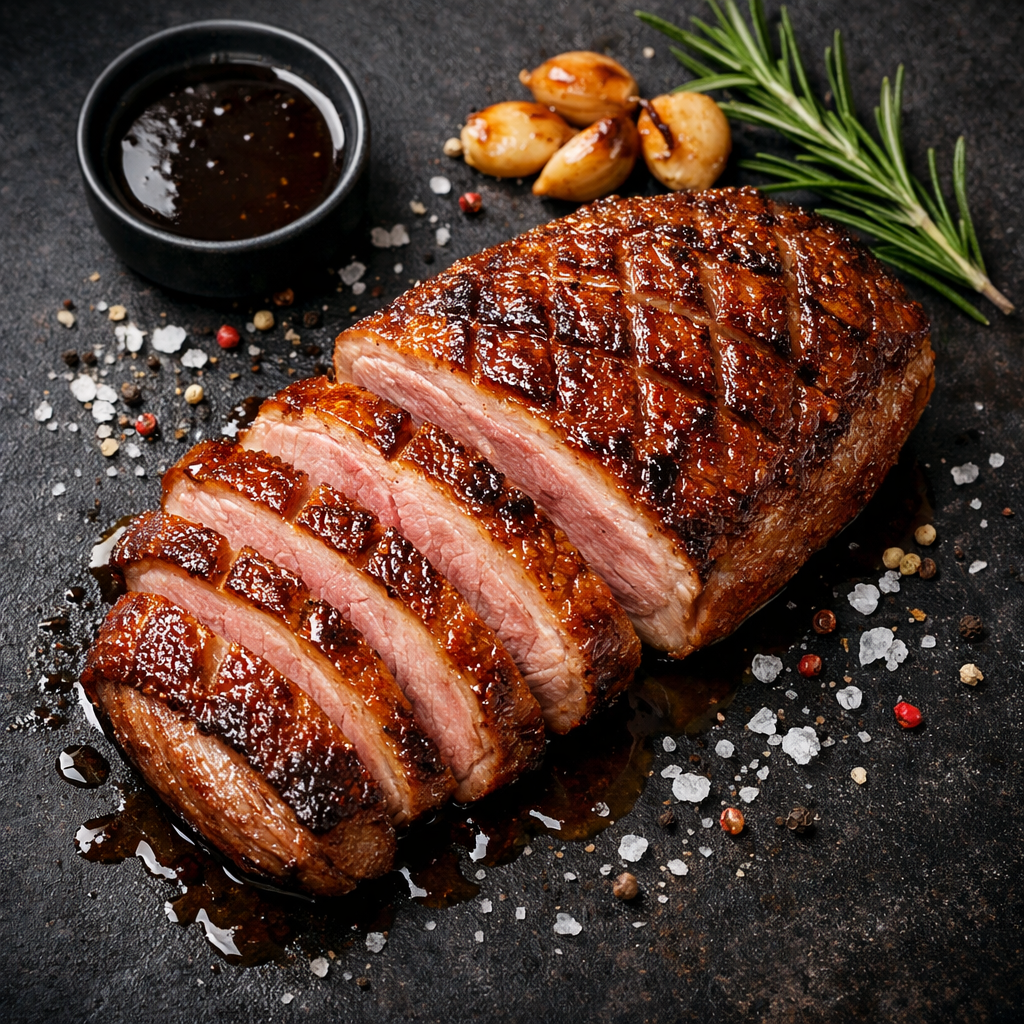
Duck breast is deceptively rich. Under that lacquered, seared skin sits a layer of fat that melts into the pan, and the meat itself stays pink, almost beefy, with a faint iron note that white wines usually can't reach. Then there's the char, that bitter, smoky edge from a hot pan or a torch, and often a sauce built on reduction, pepper, or a spoonful of fruit preserve.
All of that calls for a red with real backbone. You want tannin to grip the fat and cut through it, enough acidity to keep your palate awake through the richness, and dark fruit that can shake hands with whatever jus or sauce lands on the plate. A wine that's too soft gets swallowed by the fat. A wine that's too oaky just piles heat on heat.
The good news is that duck breast is generous with reds. It can take power, but it also flatters silkier, more perfumed styles if that's what's in your cellar. The trick is matching the wine to how you've cooked the duck: rare and simple wants freshness, a heavier sauce wants grip.
The perfect matchWhere pepper, smoke and dark fruit meet the seared skin
Hermitage Syrah from Yann Chave has that streak of black pepper and garrigue that seems built for a duck breast straight out of a hot pan. The tannin is firm enough to grab onto the rendered fat and hold its ground, while the dark berry fruit underneath meets any jus or berry sauce you've reduced alongside it.
What makes this pairing click is the smoke. Seared duck skin picks up a bitter, charred edge, and this Syrah doesn't shy away from that, it leans into it with its own smoky, peppery register. Pour it once the duck has rested and sliced, and let the two smoky notes talk to each other.
Also greatA lighter hand that lets the duck's own flavour lead
Marsannay Les Longeroies from Domaine Charles Audoin takes a different approach entirely. Instead of matching power with power, this Pinot noir brings brighter red-fruit acidity and a tannin structure so silky it almost disappears, cutting through the duck fat with freshness instead of muscle.
This is the bottle for a simpler preparation, duck breast just seared and sliced, maybe with nothing more than its own jus. The wine stays light on its feet and lets the meat's flavour come through clearly, rather than layering more richness on top of an already rich dish.
Also greatClassic Bordeaux grip for magret and its red-wine reduction
Château Pichon Baron brings the kind of firm, structured tannin that Pauillac is known for, built from Cabernet sauvignon and Merlot grown on gravel that pushes for concentration. Cassis and cedar notes give it a seriousness that matches the density of a proper magret, especially one finished with a peppercorn or red-wine reduction.
If your duck breast leans toward a bistro classic, thick-cut, cooked to a deep rose, sauced with something built on wine and stock, this is the register to reach for. The tannin here is doing real work, not just decoration.
The smart pickMerlot-led plushness for a weeknight duck breast
Clos des Confidences from Cyril Gouy gives you the Saint-Émilion Grand Cru profile you'd want alongside duck: ripe dark fruit, a plush Merlot-led texture, and enough tannin to take on the seared skin and fat without any fuss. It's noticeably gentler on the wallet than the Hermitage, which makes it an easy bottle to open on a random Tuesday rather than saving it for an occasion.
The grip here comes from real structure, not just alcohol, so it still does the job a duck breast asks of a red. If you're cooking duck breast as a quick dinner rather than a production, this is the bottle that keeps things simple without cutting corners on the pairing.
The Swiss wayA rustic Alpine red with the duck's own gaminess in mind
Combe d'Enfer, the Cornalin from Cave La Rodeline, comes from Valais granite, and there's a mineral edge running under the dark cherry and spice that gives this wine a different kind of grip than the French classics on this list. It's tannic, a little wild, and it doesn't try to be polished.
Duck breast has a natural gaminess that a smoother, more polished red can sometimes smooth over completely. This Cornalin doesn't do that. It meets the duck's character head-on, and the granite minerality helps slice through the fat in its own, more rugged way.
We hope our selection helped you land on the right bottle for your duck breast. This is a dish that belongs on a table where people linger, slicing thin, passing the sauce round a second time, whether that's a Sunday lunch with family or a smaller dinner with someone whose company you enjoy. Once the duck is rested and plated, that's the moment to pour whichever bottle you've chosen. Snap a photo of your table and tag us, we always like seeing what ended up in the glass.
Frequently asked questions
Should I open a red or a white wine with duck breast?
Red is the classic choice, and for good reason: duck breast has enough fat and iron-rich flavour to stand up to tannin, which a white wine simply doesn't have. If you're set on a white, look for something rich and barrel-aged, but a red will almost always give you a more satisfying match, especially with seared skin.
Which grape variety works best with duck breast?
Syrah is a natural partner, its pepper and smoky garrigue notes echo the seared skin, which is why Hermitage sits at the top of this list. Pinot noir brings a lighter, brighter option, Cabernet-Merlot blends from Bordeaux add classic structure, and a rustic red like Cornalin brings a different, more alpine character. All four routes work, they just take you to a different kind of duck breast.
The skin is charred and the fat is rich, how do I pick a wine that can handle that?
Look for a wine with real tannin and some structure rather than pure fruitiness. Tannin binds to fat and clears your palate between bites, while a touch of pepper or spice in the wine actually flatters the char instead of fighting it. This is exactly why Syrah and Cabernet-based reds handle magret so well.
Can I serve something sweeter if my duck comes with a fruit sauce, like cherry or orange?
You don't need an actually sweet wine, just one with generous dark fruit that can meet the sauce halfway. A Syrah like Hermitage or a plush Merlot-based Bordeaux already carries enough ripe black fruit to sit comfortably next to a cherry or citrus reduction without needing residual sugar.
What if one guest really wants a white wine with their duck?
Steer them toward a full-bodied, barrel-aged white with some richness, it won't have the tannin to cut the fat the way these reds do, but it can still hold its own against the meat if the duck is served simply, without a heavy sauce. It's a compromise, not a perfect match, so don't be surprised if they end up reaching for your glass instead.
More pairings in Poultry & Duck

You have the ideas.
We have the perfect wine.
Tired of overthinking your wine choice? Just tell us in a few words why you need a bottle and we'll find the perfect wine in under a minute.