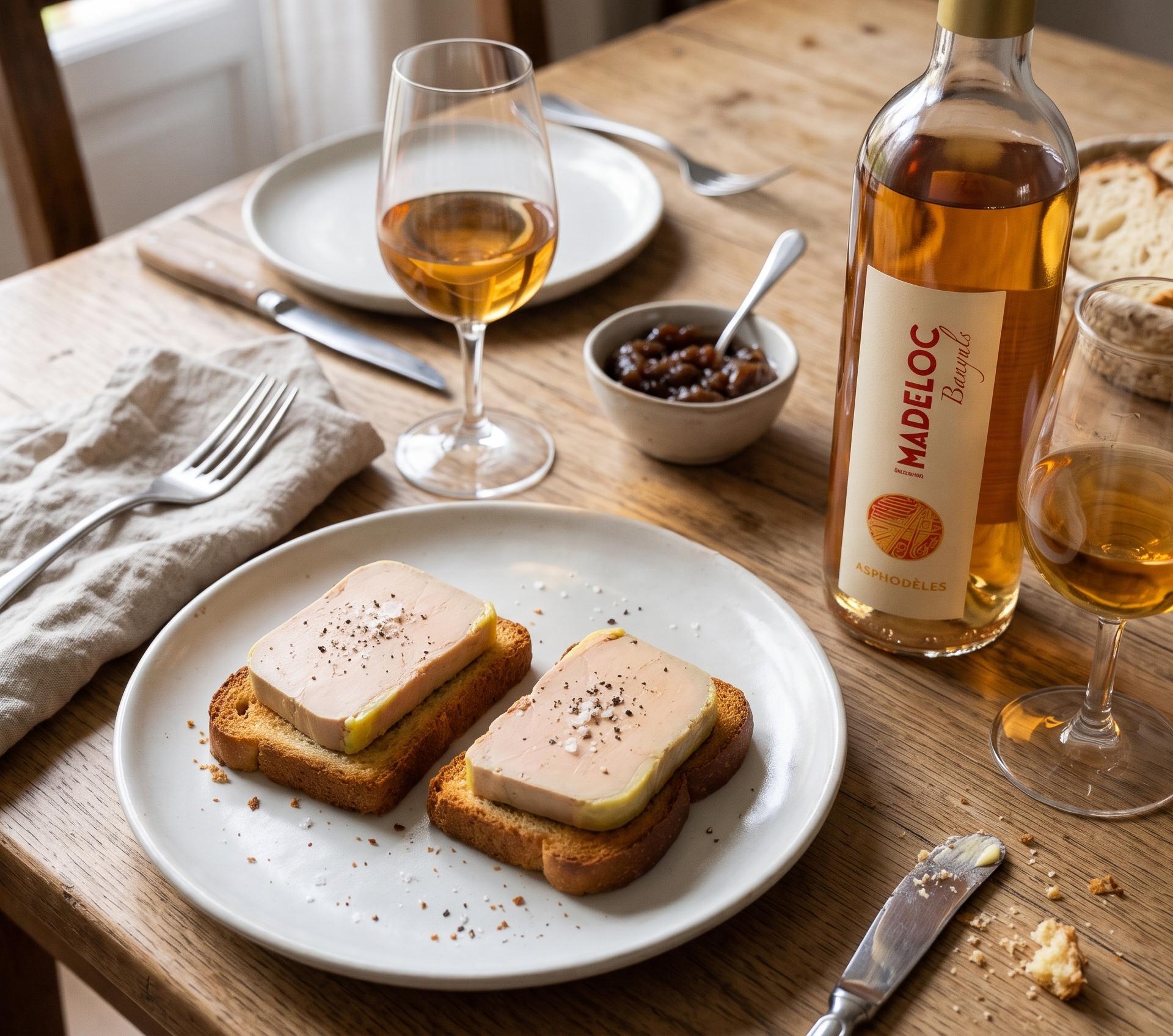
Foie gras is almost pure fat. It melts on contact with warmth, slicks the whole mouth, and leaves barely any acidity or crunch behind to balance it out. The toast gives you something to chew on, but it doesn't cut through anything. The richness just sits there, coating your tongue long after the bite is gone.
That's the problem a wine has to solve. Either it brings its own sweetness, rich enough to meet the foie gras on equal terms and turn the pairing into a contrast of two intense things, or it brings sharp acidity and bubbles that scrub the fat off your palate so you're ready for the next bite. Both approaches are classic for a reason. What doesn't work is a wine that just sits there too, soft and neutral, because then you've got two rich things with nothing happening between them.
There's also the question of how festive you want this to feel. Foie gras on toast tends to show up at a table where something is being celebrated, so the wine gets to play a part in that too, not just the technical job of balancing fat.
The perfect matchThe dried-apricot answer to all that fat
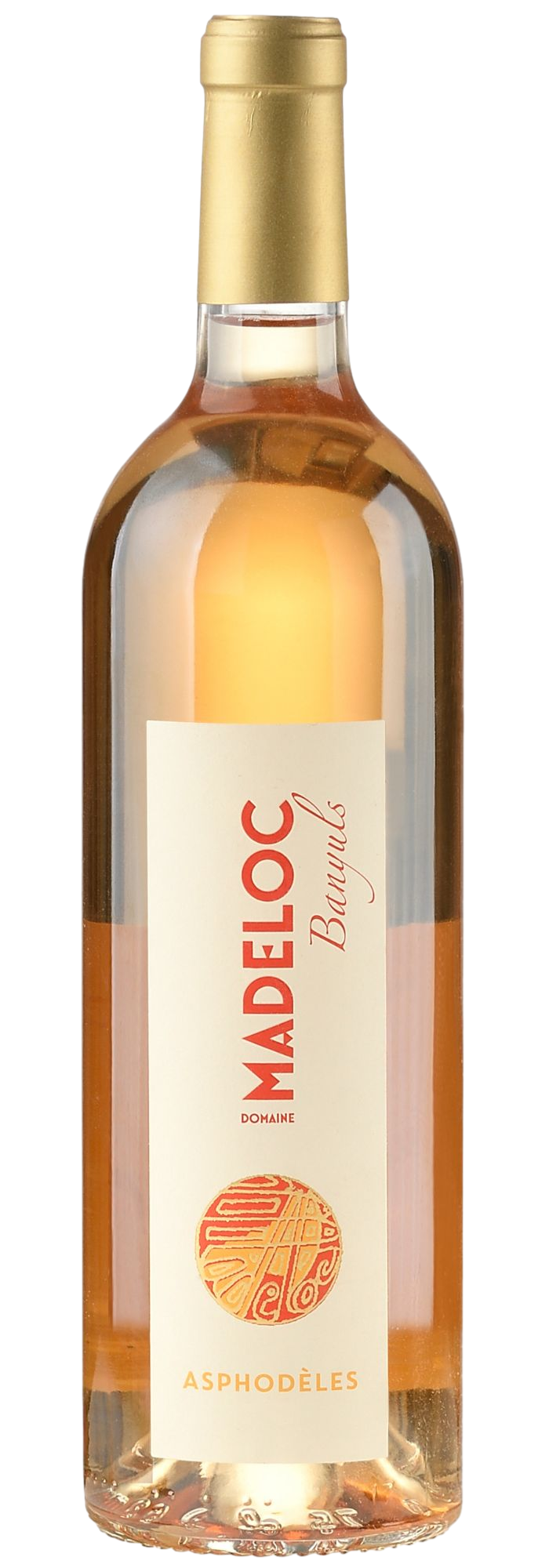
Banyuls is built around exactly this kind of pairing. Asphodèles, made from Grenache gris and Malvasia, carries concentrated dried-apricot fruit and a honeyed sweetness that doesn't just sit next to the foie gras, it meets it head-on. Two rich things on the table, each one making the other taste more interesting.
What keeps it from feeling heavy is the streak of acidity running underneath. Without it, this would be a sweet wine pushing against a fatty dish and the whole thing would collapse into mush. With it, each sip resets your palate a little before the next bite of toast. This is the pairing people mean when they talk about the classic sweet-savoury match for foie gras, and it earns that reputation.
Also greatOr scrub the palate instead of sweetening it
If sugar next to foie gras sounds like too much for you, go the other direction entirely. The Clos de Tsampéhro Brut Edition VIII is dry, built from Chardonnay, Petite Arvine and Pinot Noir, with fine bubbles and real acidity. Instead of matching the richness, it cuts straight through it, leaving your mouth clean and ready for the next forkful. Same problem, opposite tool, equally valid answer.
Also greatA Geneva Chenin, all honey and apricot
Domaine de Beauvent's Chenin takes a different road from both the Banyuls and the Valais bubbles. The nose brings honey, apricot and pear, aromas that lean naturally toward foie gras, and the palate has a lively acidity with a touch of grapefruit that keeps the fat from settling in.
The finish is long, long enough to carry you to the next toast. It's the Geneva option in the selection, for anyone who wants an aromatic white alongside the foie gras.
Treat yourselfWhen the toast deserves its own occasion
Foie gras on toast already feels like an event, and Taittinger's Nocturne Sec leans into that. It's Champagne first, so you get the fine, persistent bubbles that do the same palate-cleansing work as the Valais sparkling wine, but with a touch of peachy sweetness from its dosage that softens the edge.
The extra bottle here buys you a bit of both camps at once, acidity and lift from the Champagne base, a little sweetness to meet the richness halfway. It's the kind of pour that turns a starter into the moment people remember from the evening, poured the instant the toast hits the table.
Foie gras on toast doesn't come around every week, so we hope one of these bottles gives you exactly what you were after for it. It's the kind of dish that opens a meal rather than closes one, the first bite before the table settles into the rest of the evening with people you actually want to be there. Reach for whichever glass matches the mood you're going for tonight. If you land on a favourite, tell us about it and tag us, we like seeing what ends up on the table.
Frequently asked questions
Should I serve a sweet wine or a dry wine with foie gras?
Both work, but they do opposite jobs. A sweet wine like a Banyuls-style vin doux naturel matches the richness with its own concentration, while a dry sparkling wine uses acidity and bubbles to scrub the fat off your palate between bites. Pick based on whether you want contrast or a reset.
Is red wine a good match for foie gras?
Generally no. Tannins grip onto fat in an unpleasant way and tend to turn metallic against liver, so most tannic reds fight the dish rather than complementing it. White wines, whether sweet or dry and sparkling, handle the richness far more gracefully.
Can Champagne replace a sweet wine with foie gras?
Yes, especially a Champagne with a touch of dosage rather than a bone-dry one. The bubbles lift the richness the same way a dry sparkling wine does, while a little residual sugar gives it some of the softness a sweet pairing brings.
Isn't Sauternes the classic pairing for foie gras, not Banyuls?
Sauternes gets most of the attention, but a Banyuls-style wine plays the same role with dried apricot and honeyed sweetness instead of botrytis fruit. Both rely on a streak of acidity under the sweetness to keep the pairing from feeling heavy on heavy.
What if one guest wants a dry white instead of anything sweet?
A dry sparkling wine is the simplest answer. Its acidity and bubbles cut through the fat without any sweetness, so nobody at the table feels they are drinking dessert.
More pairings in Charcuterie & Aperitif
The grapes in this selection
Chardonnay
The world's most popular white grape—a true chameleon of flavors!
Pinot Noir
The heartbreak grape that rewards patience with unmatched elegance and complexity
Chenin Blanc
The chameleon grape that makes everything from bone-dry to lusciously sweet wines.
Grenache Gris
The golden middle child of the Grenache family, delivering peachy Mediterranean charm!
Malvasia
An ancient Mediterranean charmer with aromatic magic and delightful versatility
Petite Arvine
Switzerland's Alpine treasure with a salty twist and citrus sparkle.
You have the ideas.
We have the perfect wine.
Tired of overthinking your wine choice? Just tell us in a few words why you need a bottle and we'll find the perfect wine in under a minute.