

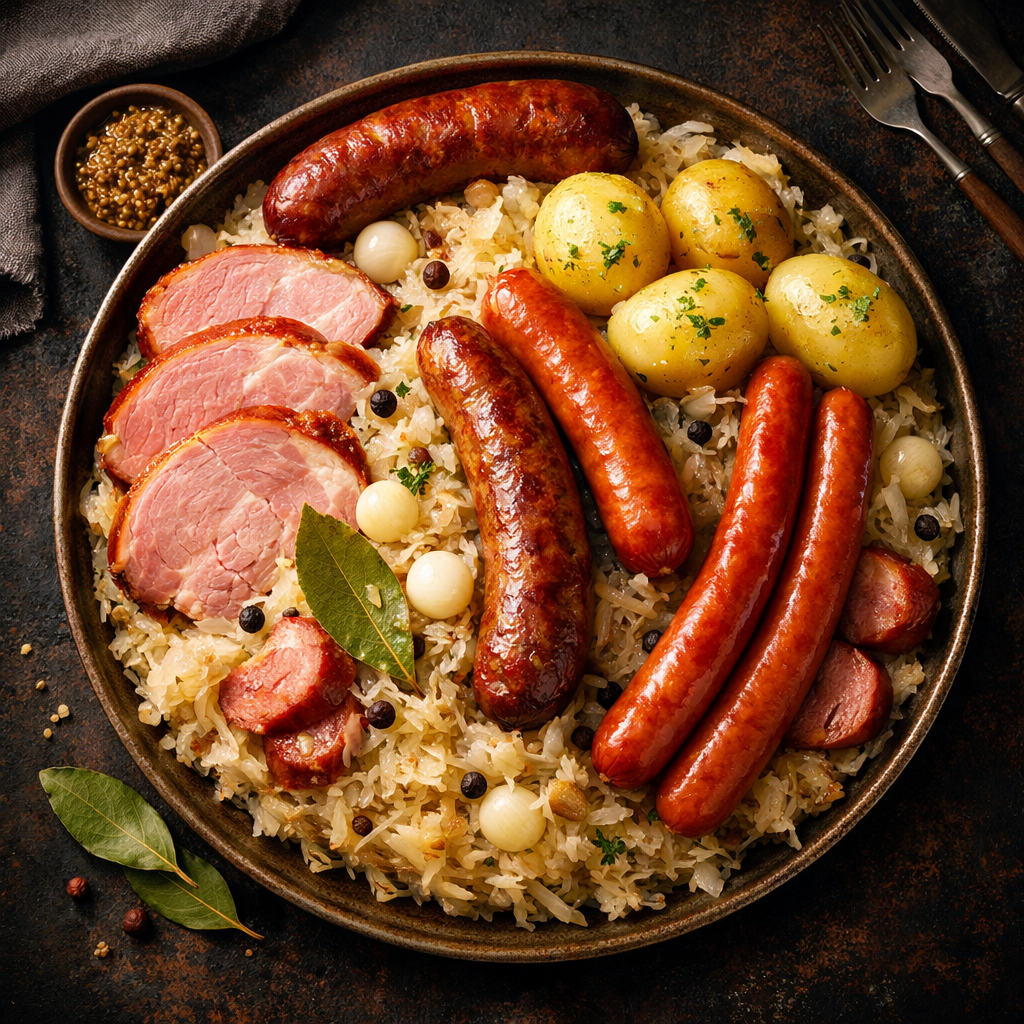
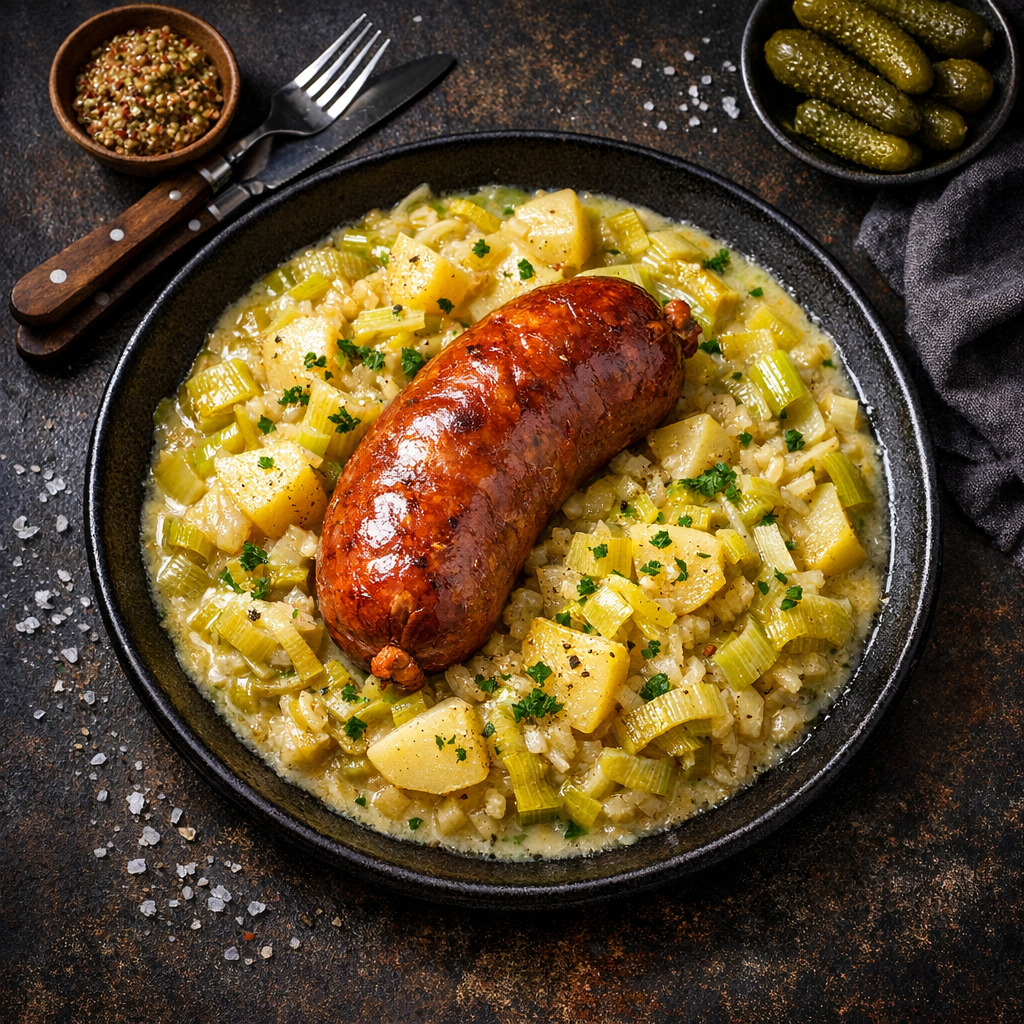
Pork shows up in a lot of different coats. Sometimes it's a sausage simmered with cabbage, sometimes it's a shoulder braised until it falls apart next to potatoes. What ties these dishes together is fat, and usually salt right behind it, from the cure, the smoke, or the cooking liquid itself.
That combination is forgiving in some ways and demanding in others. A wine with no backbone just gets steamrolled by the richness and disappears. You need something with enough acidity to cut through the fat and reset your palate for the next bite, and enough fruit or roundness to not feel thin next to a dish that's been cooking for hours. Tannin matters less here than freshness does, because pork rarely has the kind of char or bite that calls for grip.
Each dish below takes that base and pulls it in its own direction, whether that's the tang of fermented cabbage or the earthiness of root vegetables, so the right glass shifts from one to the next. Scroll down and you'll find a pairing built for each one.
Frequently asked questions
Does pork always call for a red wine?
Not at all. Pork is lean to medium in fat compared to beef or lamb, so a white with some body or a light, fresh red can both work depending on how the dish is cooked and what it's served with.
How do I deal with the saltiness in cured or smoked pork?
Salt tends to make wine taste softer and fruitier, which is useful, but it also shows up any harsh edges in a wine fast. Look for something with a bit of natural sweetness or roundness rather than a lean, austere style.
Should I match the wine to the meat or to the side dishes?
With pork, the sides often do more talking than the meat itself. Cabbage, potatoes, lentils or root vegetables each bring their own acidity or earthiness, so it's worth thinking about the whole plate, not just the protein.
Is there a single wine style that works for every pork dish?
There's no single answer that covers all of them, because a quick pan-fried cutlet and a dish braised for three hours ask for different things. That's why each dish on this page gets its own suggestion rather than one blanket rule.
Does the cooking method change what the wine needs to do?
Yes. Slow braising builds deep, almost sweet flavours that can take a wine with more weight, while grilling or pan-frying keeps things lighter and usually wants a wine that stays fresh and doesn't compete.
You have the ideas.
We have the perfect wine.
Tired of overthinking your wine choice? Just tell us in a few words why you need a bottle and we'll find the perfect wine in under a minute.