

Cheese is fat, salt and sometimes a good dose of funk, all in one bite. Melt it into a fondue and you add heat, wine or kirsch already stirred in, and bread doing the work of soaking everything up. That combination is trickier than it looks. A wine that feels lovely on its own can turn flat or sharp next to a pot of bubbling gruyère and vacherin.
What these dishes ask for is usually acidity, sometimes a bit of grip, and almost never heavy tannin. Fat coats your tongue, and a wine with no cut just sits there under it instead of clearing the way for the next bite. But the right amount of edge depends on the cheese itself, how it was aged, what else is in the pot or on the board, and how the dish is served.
That is why each dish below gets its own pairing rather than one blanket answer for the whole category. Fondue behaves differently from a raw milk cheese platter or a baked reblochon, even if they all start from the same barn.

Frequently asked questions
Should I always go for a white wine with cheese?
Not always, but it is the safer default. Most cheese, especially melted cheese, wants acidity more than it wants tannin, and white wines tend to bring that more reliably. Reds can work too, especially with drier, aged cheeses, but they need to be chosen carefully so the tannin does not clash with the fat.
Does the wine need to match the region the cheese comes from?
It helps, but it is not a rule you need to follow. Regional pairings often work because the two grew up on the same tables for generations, so the match has already been tested by habit. That said, plenty of good pairings cross borders. What matters more is the wine's acidity and weight than its passport.
Why does fondue need a different wine than a cheese platter?
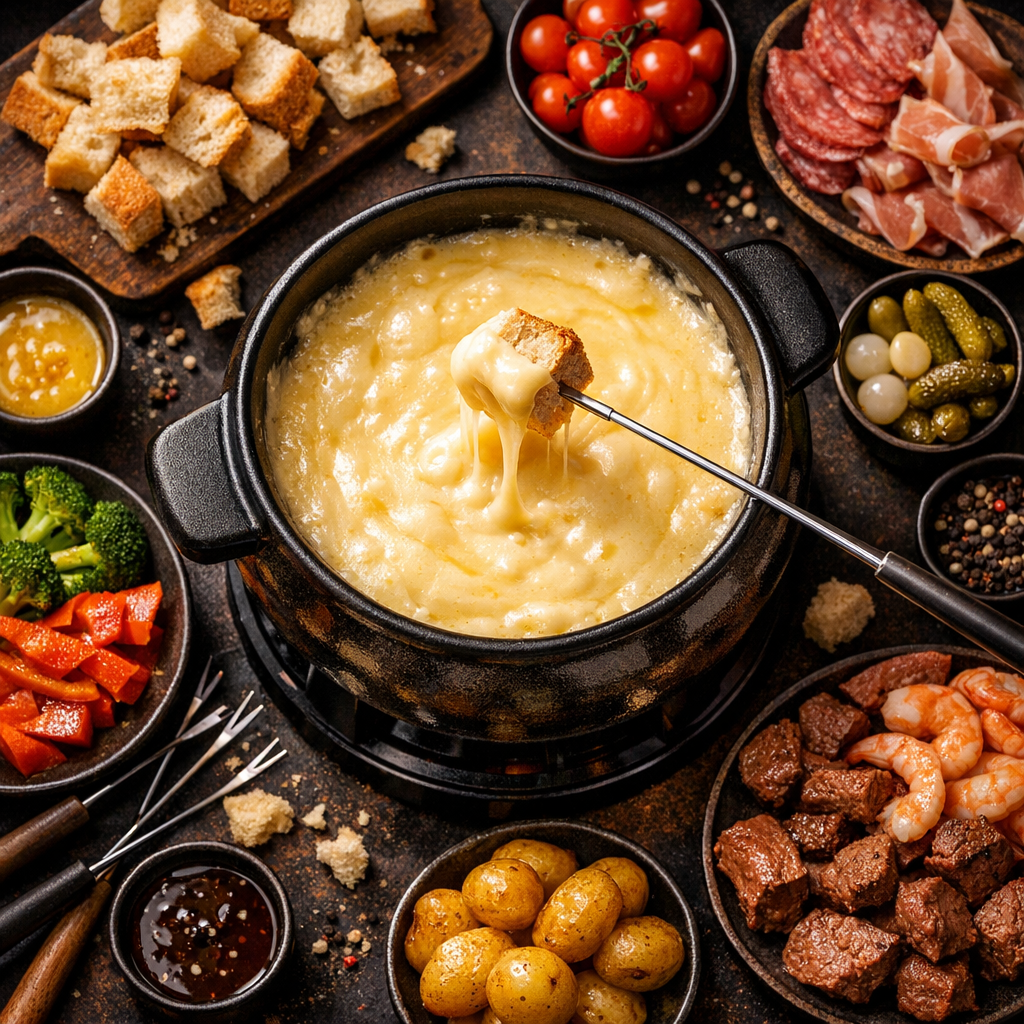
Because it is not the same dish, even though the cheese is similar. Fondue is hot, often has wine or kirsch already mixed in, and comes with bread that soaks up fat. A cold cheese platter has more separation between bites, so the wine can behave differently. That is why they are treated separately below rather than lumped into one answer.
Is it true that red wine with cheese is a myth?
It is more of an oversimplification than a myth. The idea that any red goes with any cheese ignores how different cheeses actually behave in the mouth. A soft, buttery cheese can make a tannic red taste harsh, while a firm, aged one can handle it fine. It depends on the specific cheese, which is exactly what the individual dish pages are for.
What if I am serving several cheeses at once?
Then you are really choosing a wine for the hardest cheese to please, not the easiest one. Pick the wine based on whichever cheese is fattiest, saltiest or most pungent on your board, since that is the one most likely to clash. The milder cheeses will usually go along for the ride without complaint.
You have the ideas.
We have the perfect wine.
Tired of overthinking your wine choice? Just tell us in a few words why you need a bottle and we'll find the perfect wine in under a minute.