

Seafood covers a lot of ground, from a raw oyster slurped straight off the shell to a whole platter piled high with crab, langoustine and clams. What ties it together is brininess. There's a saltiness and a faint iodine note running through almost everything that comes out of the sea, and that's the first thing a wine has to answer for.
The flesh itself is usually delicate. Think of how a sole fillet falls apart compared to a sear of lamb. That softness means a wine with hard edges, heavy tannin or too much oak will flatten the dish rather than lift it. What works instead is freshness, a wine that cuts through the salt and keeps the mouth clean between bites. Butter, lemon, a cream sauce or a dash of mayonnaise all shift that balance too, adding richness that the wine then has to carry alongside the brine.
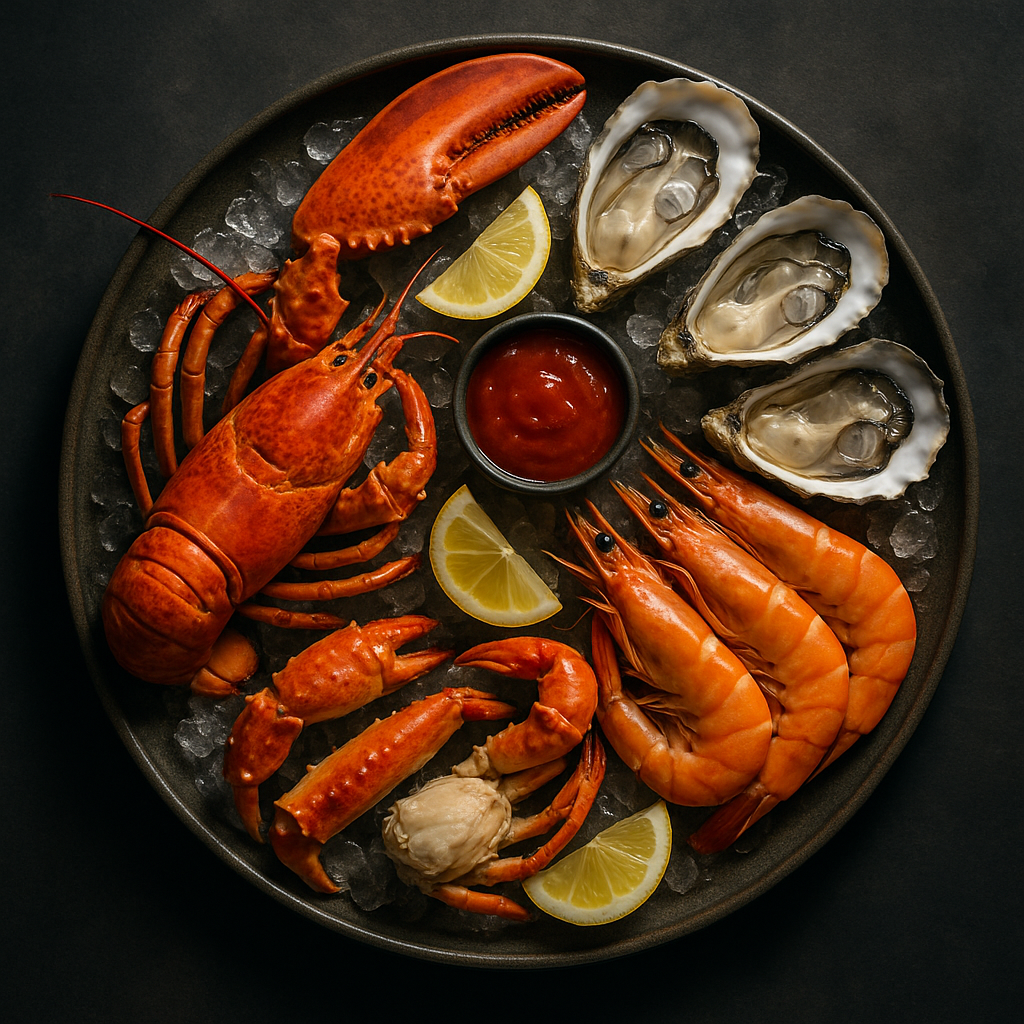
A seafood platter raises the stakes because it's not one dish, it's several at once. Raw oysters, cooked prawns, maybe a crab claw, each with its own texture and its own level of sweetness. The dishes below go into the details for each case, because what suits a plate of raw shellfish on ice isn't quite what you'd pour for seafood that's been grilled, fried or dressed in a rich sauce.
Frequently asked questions
Does seafood always need a white wine?
White wine is the safer default because its acidity matches the brininess of most seafood without weighing it down. That said, some preparations, especially grilled or richly sauced fish, can carry a lot more than a simple white, so it's worth looking at the specific dish rather than assuming white is the only answer.
Why does acidity matter so much with seafood?
Seafood brings its own salt and often a mineral, briny edge. A wine with bright acidity cuts through that, cleans the palate and keeps you wanting another bite, instead of letting the saltiness build up and tire you out.
Can one wine work across a whole seafood platter?
A platter mixes raw and cooked seafood, different textures and different levels of sweetness on one plate, so it helps to pick a wine that stays crisp and neutral enough to flatter all of it, rather than one built around a single bold flavour.
Does the sauce matter more than the seafood itself?
Often, yes. A plain steamed fish and the same fish under a butter or cream sauce call for different wines, because the sauce adds richness and fat that the seafood alone doesn't have. It's worth thinking about the preparation as much as the fish or shellfish itself.
Is red wine ever right with seafood?
It can be, in specific cases, usually with seafood that's grilled, roasted or paired with a heartier sauce where the dish has enough weight to meet a light, low-tannin red halfway. It's the exception rather than the rule, and it depends on how the dish is cooked.
You have the ideas.
We have the perfect wine.
Tired of overthinking your wine choice? Just tell us in a few words why you need a bottle and we'll find the perfect wine in under a minute.