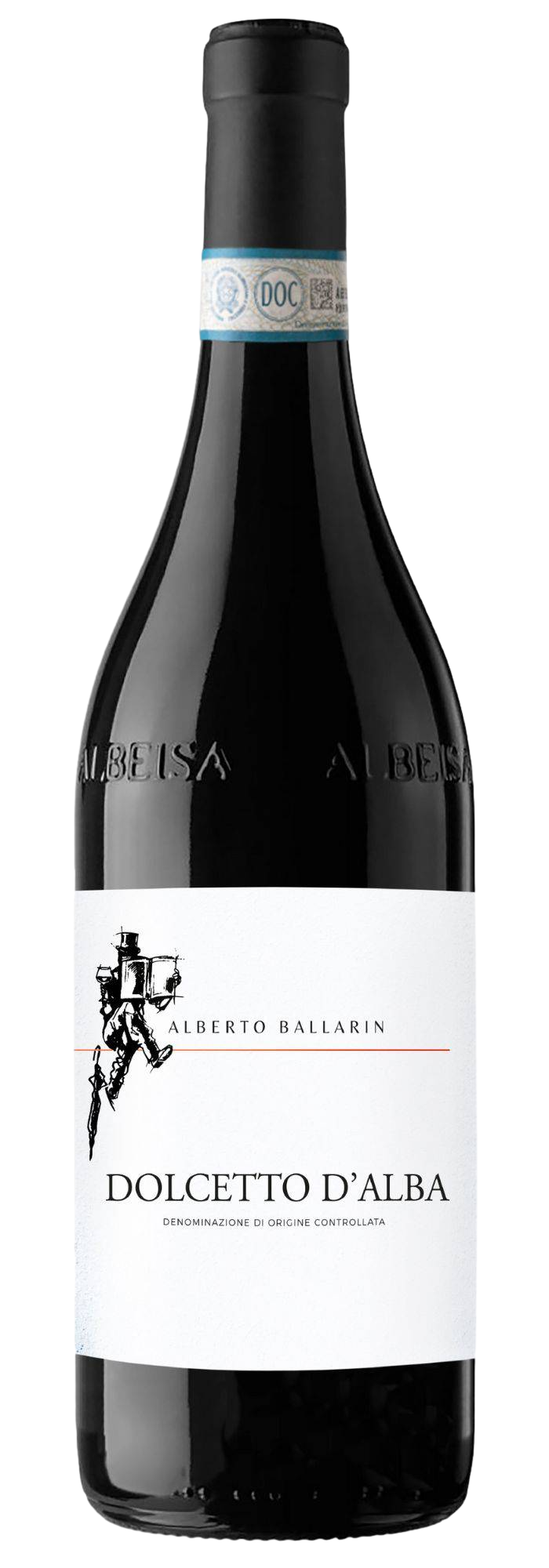
DolcettoIl n'a de doux que le nom
Le Dolcetto, quel joli nom italien qui fait rêver et saliver! Mais attention, ne te laisse pas tromper par ce qui signifie "petit doux" dans la langue de Dante. Ce cépage rouge du Piémont cache sous sa robe charmante un caractère bien trempé et une personnalité unique qui mérite qu'on s'y attarde.
Ce cépage autochtone italien est originaire du Piémont, dans le nord-ouest de l'Italie. Son histoire remonte à plusieurs siècles dans cette région vallonnée aux paysages magnifiques. Le nom "Dolcetto" ne fait pas référence au goût du vin, qui a tendance au contraire à être plutôt corsé et tannique, mais plutôt à la douceur des raisins eux-mêmes lors de la récolte.
Dans la hiérarchie piémontaise, le Dolcetto occupe une place particulière: c'est traditionnellement le "vin de semaine" des vigneron•nes, celui qu'on boit au quotidien, laissant briller la Barbera et le Nebbiolo le week-end, pendant que le Barolo et le Barbaresco vieillissent sagement en cave. En d'autres termes, il s'agit souvent de l'entrée de gamme en rouge des domaines autour d'Alba et d'Asti. Néanmoins, ces dernières années, certaines maisons se sont mises à monter le niveau et à redorer le blason d'un cépage qui le mérite amplement.
Le Dolcetto reste fidèle à ses origines: il est principalement cultivé dans le Piémont, avec environ 4'000-5'000 hectares répartis dans plusieurs appellations DOC et DOCG. Les zones les plus réputées incluent Dolcetto d'Alba DOC (environ 1'200 hectares), Dolcetto di Dogliani Superiore DOCG (400 hectares), et Dolcetto di Ovada DOC (727 hectares).
Quelques domaines aventureux l'ont planté en Ligurie voisine (où il est appelé "Ormeasco"), et on trouve des micro-productions en Californie et en Australie, mais sa production reste concentrée à plus de 95% en Italie du Nord.
Comment reconnaître ce cépage?
Le Dolcetto séduit immédiatement par son bouquet généreux et invitant. Dès le premier nez, il révèle une palette de fruits rouges et noirs d'une intensité remarquable: cerise noire juteuse, prune mûre, mûre sauvage et cassis se mélangent harmonieusement avec des notes de myrtille et de raisin frais. Cette base fruitée s'enrichit de nuances florales délicates, notamment la violette et la rose, parfois rehaussées de touches de lavande qui apportent une dimension méditerranéenne au bouquet. Les épices complètent ce tableau aromatique avec des notes de poivre noir, de réglisse et d'anis, tandis que les herbes sèches comme le thym et le romarin ajoutent une complexité typiquement piémontaise.
Ne te fie surtout pas à son nom doux: le Dolcetto a du caractère et sait se faire respecter. Il arbore une robe rouge rubis profonde, parfois teintée de reflets violacés qui peut trahir sa jeunesse. Les tanins, bien présents et structurants, gardent néanmoins une texture veloutée qui rend le vin accessible et gourmand. L'acidité modérée équilibre parfaitement l'ensemble, apportant cette fraîcheur indispensable qui évite toute lourdeur. Le corps moyen se caractérise par une texture juteuse et une gourmandise immédiate, tandis que la finale persiste et donne envie d'y revenir. Le Dolcetto mûrit plus tôt que le Nebbiolo, ce qui lui permet de conserver cette belle fraîcheur fruitée qui en fait un vin de plaisir immédiat.
Le Dolcetto est véritablement le compagnon idéal de la cuisine piémontaise et de la dolce vita. Avec la charcuterie, il fait des merveilles: salami, bresaola et jambon de Parme trouvent en lui un partenaire de choix qui respecte leurs saveurs sans les écraser. Les pâtes traditionnelles comme les agnolotti del plin ou les tagliatelles aux truffes révèlent toute leur noblesse accompagnées d'un bon Dolcetto. Côté viandes, le bollito misto, les braisés de bœuf et l'agneau grillé s'accordent parfaitement avec sa structure tannique équilibrée. Les fromages du Piémont, du gorgonzola crémeux au taleggio puissant en passant par la délicate robiola, trouvent dans ce vin un écho gustatif parfait.
La production de Dolcetto dans le monde
Silence, ça pousse... Retrouve ci-dessous la liste avec les 4 plus gros producteurs de Dolcetto.
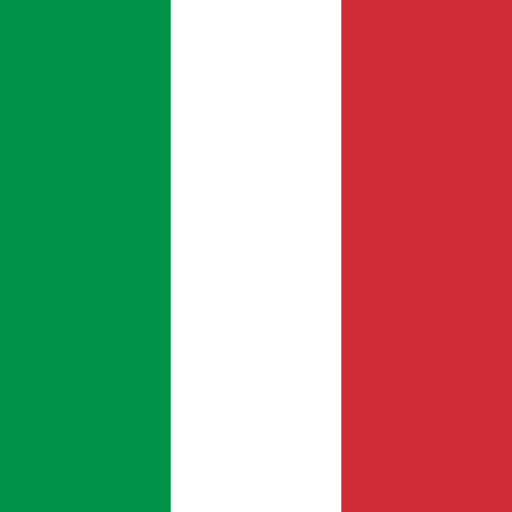
ItaliePiémont, Ligurie
4 700 ha
Etats-UnisCalifornie
50 ha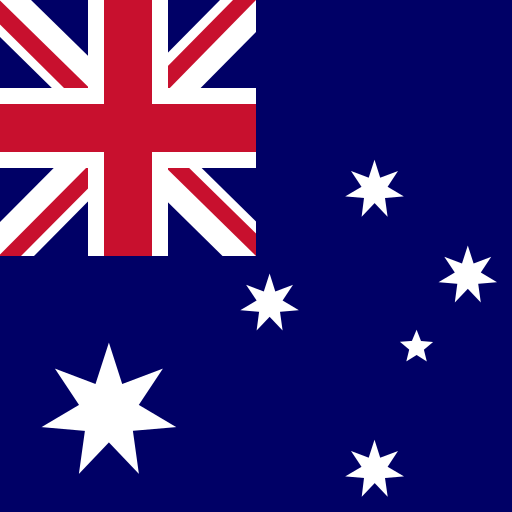
AustralieMcLaren
30 ha
ArgentineMendoza
20 haSi tu aimes ce cépage...
Continue ta lecture en découvrant d'autres cépages.
Fiche du cépage
Origine
Italie