
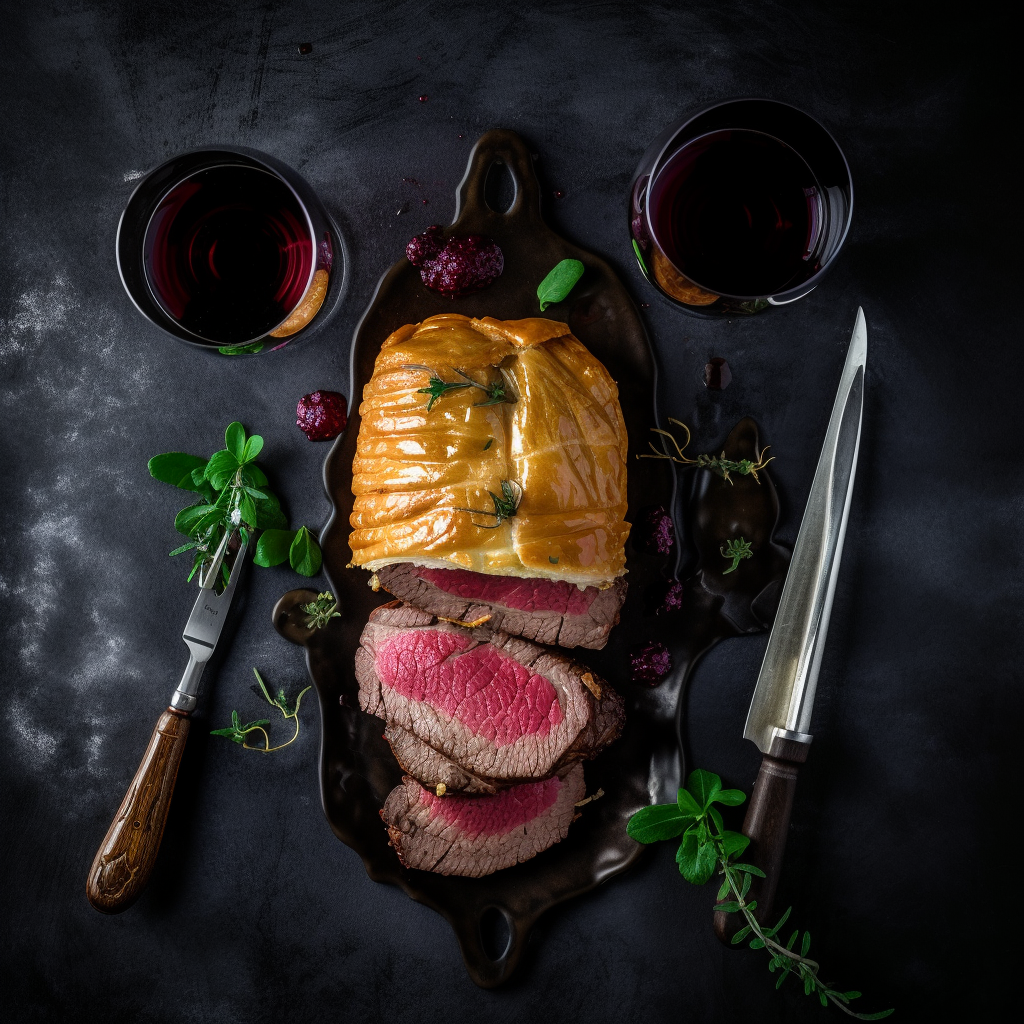
Beef changes personality depending on what you do to it. Raw and chilled, it tastes of iron and salt. Braised for hours in wine and stock, it turns soft and deeply savoury. Seared hot and fast over a flame, it gets a crust that tastes almost like caramel and char. Same muscle, three different dishes, three different questions for the glass.
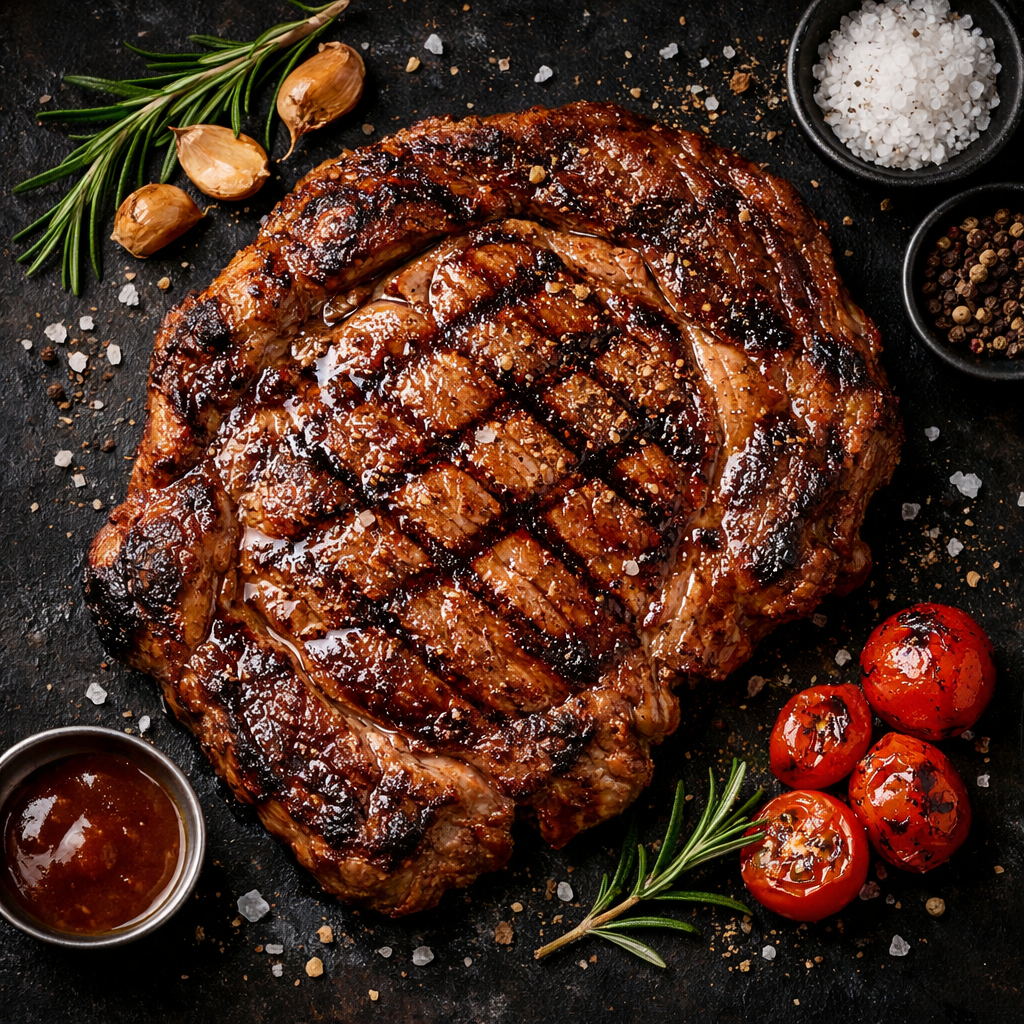
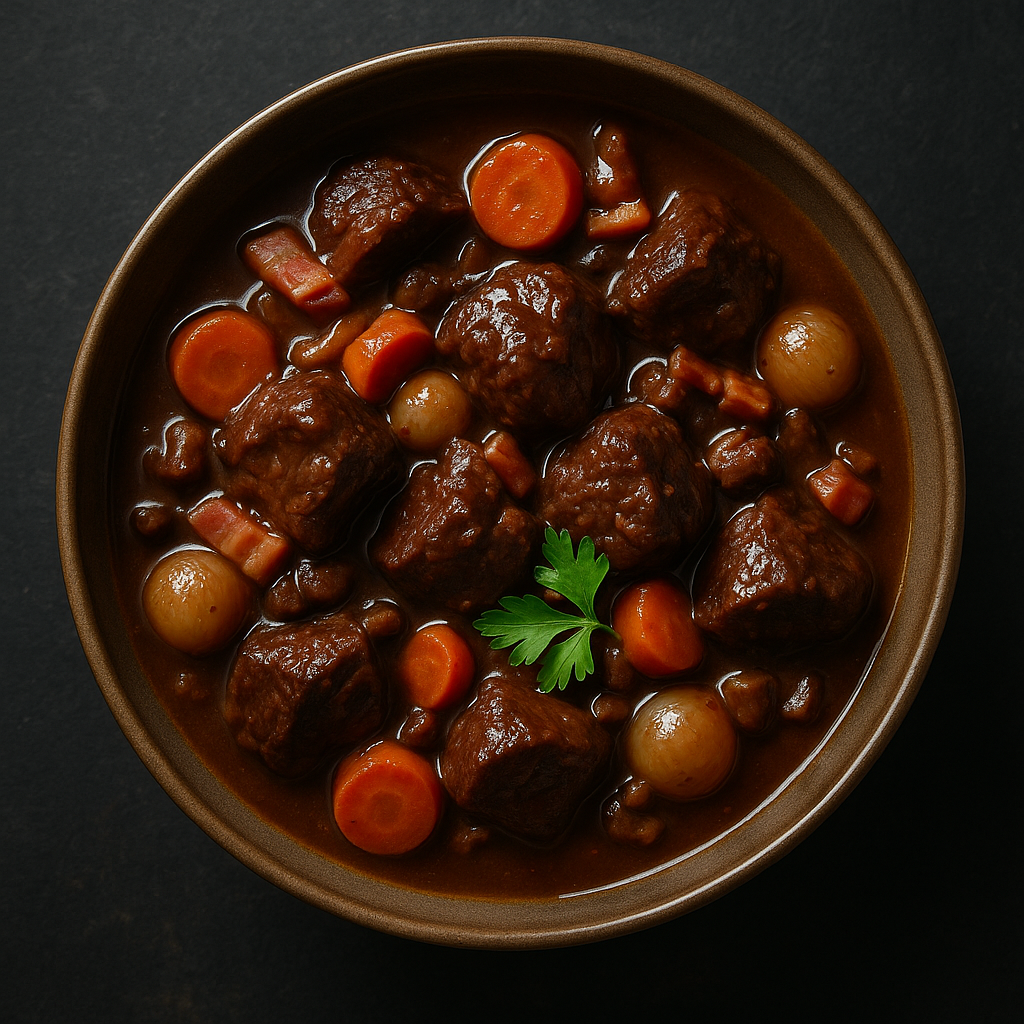
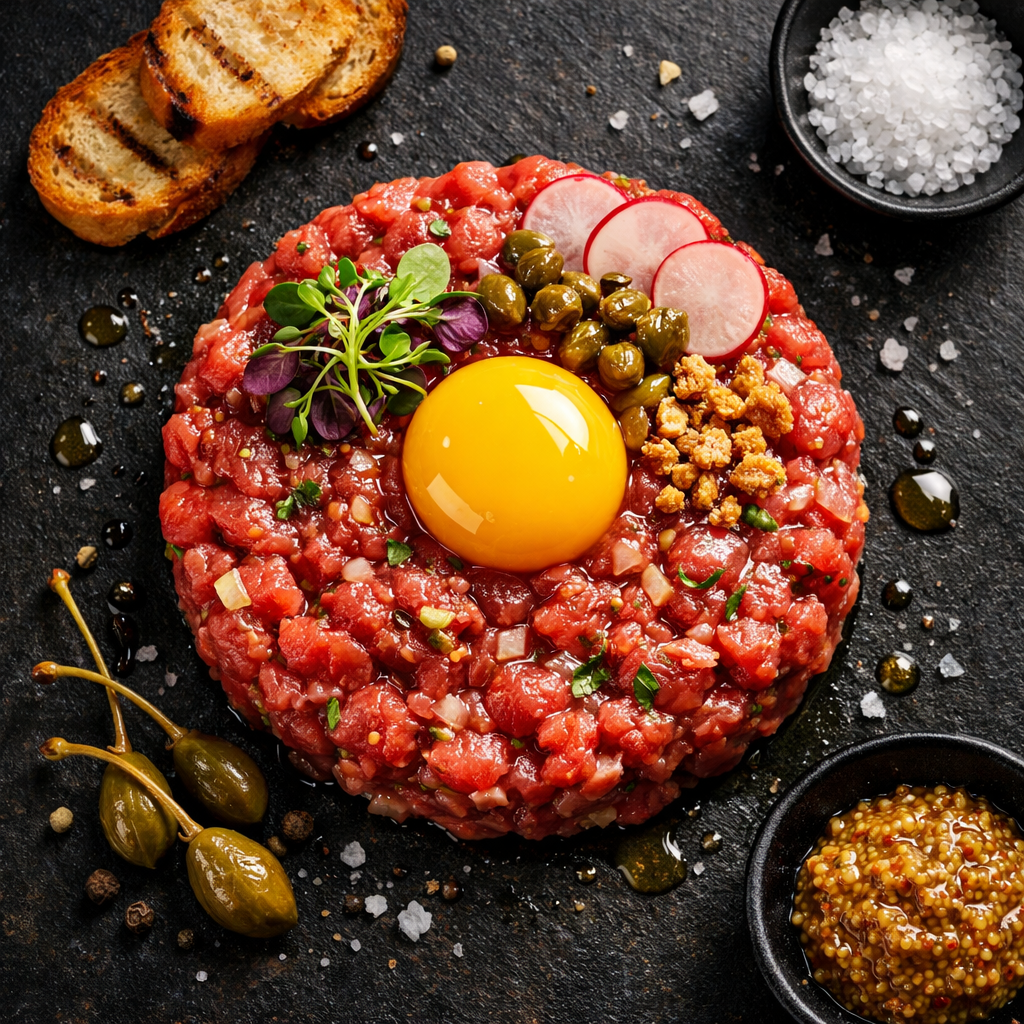
What ties them together is protein and a certain richness, but the degree of that richness swings wildly. A tartare barely has any fat to speak of. A bourguignon carries the weight of its sauce, its mushrooms, its hours on the stove. A ribeye brings its own marbling and a smoky crust from the pan or the grill. Each of these wants a different balance of tannin, acidity and weight, and getting that balance wrong is usually why a good bottle falls flat next to a good steak.
Below, each dish gets its own pairing logic, tuned to how it's cut, cooked and seasoned.
Frequently asked questions
Does beef always call for red wine?
Most of the time, yes, because red wine's tannin plays well with beef's protein and fat. But the shade of red matters a lot. A light, raw tartare and a rich braised bourguignon don't want the same red, and some cuts even work with a fuller white if the preparation is right.
Why does the cut of beef change what wine to pour?
A lean cut like a raw tartare has almost no fat to soften a wine's tannin, so a heavy, gripping red can taste harsh next to it. A marbled ribeye has enough fat to stand up to something bigger and more structured. The cut sets the ceiling for how much wine the dish can carry.
Does the cooking method matter more than the cut itself?
Often it does. Raw beef, slow-braised beef and grilled beef each bring different textures and flavours even from similar cuts. Searing adds char and caramelised notes, braising adds the depth of a long-cooked sauce, and raw beef stays clean and mineral. The wine needs to answer whichever one is on the plate.
Does a rich sauce mean I need a bigger wine?
Generally yes. A dish built around a long-simmered sauce with wine, stock and vegetables needs a red with enough depth to not get lost, while a simply seasoned cut of beef can let a more precise, less powerful wine show through.
Can beef dishes work with something other than a big, tannic red?
Absolutely. Raw preparations in particular often prefer a wine with more brightness and less grip, since there's no fat or long cooking to soften a heavy tannin. It's less about picking the boldest bottle and more about matching the dish's actual weight.
You have the ideas.
We have the perfect wine.
Tired of overthinking your wine choice? Just tell us in a few words why you need a bottle and we'll find the perfect wine in under a minute.