
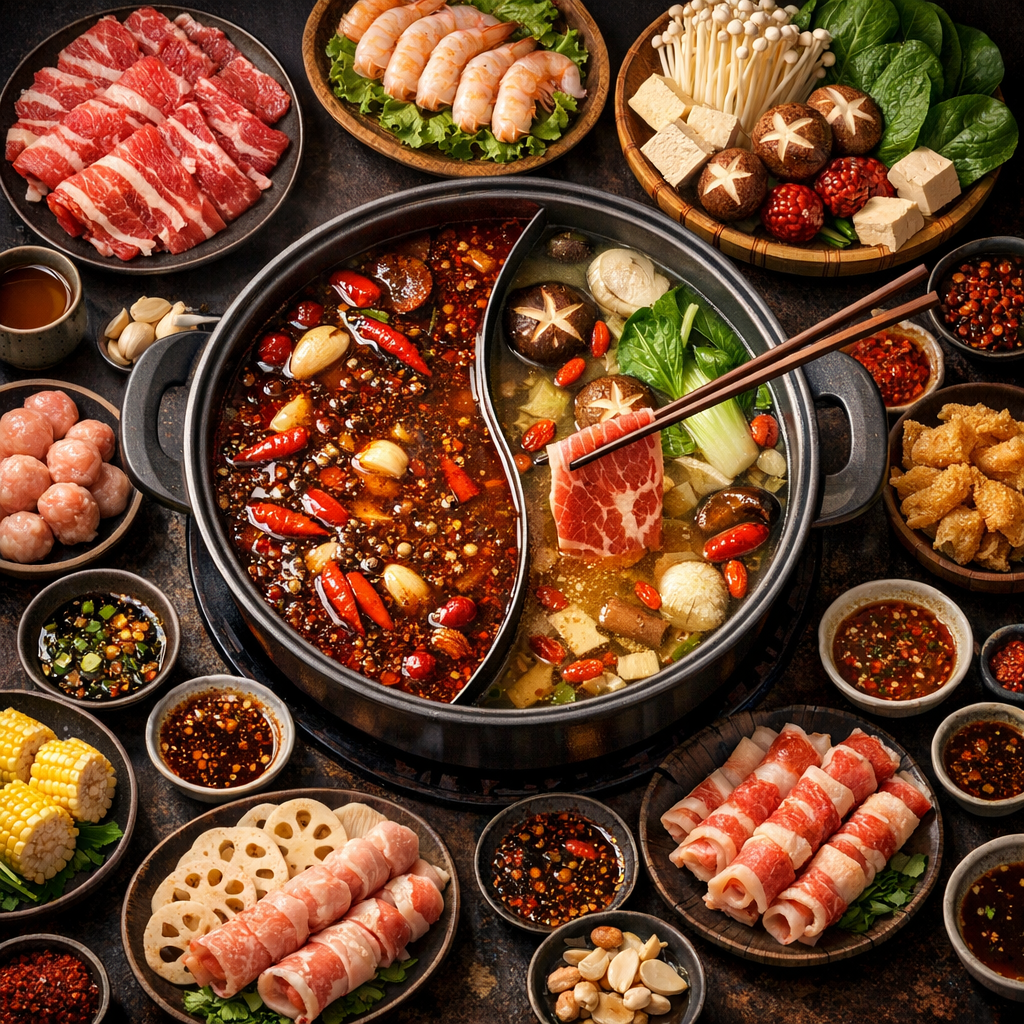
Fondue chinoise is really several dishes at once. The beef itself is thin, delicate, barely cooked, but the sauces around it do all the talking: curry, cocktail, tartare, something spicy someone always brings. A wine poured for this meal isn't matched to one flavour, it has to survive a dozen of them without picking a fight.
That's why heavy, tannic reds struggle here. Big tannins grab onto sauce and turn metallic, and oak can clash with curry or chili in ways that ruin a sip. What the table actually needs is freshness, some fruit, and tannins soft enough to let each dip do its own thing.
The four bottles below all come from Vaud and Geneva, and each handles a different corner of the sauce tray. Think of it less as picking the one correct wine and more as matching a bottle to what's actually on your plate that night.
The perfect matchThe one bottle that works across the whole sauce tray
Gamay from Geneva has a reputation for being easy to drink, and that's exactly the point here. This Tradition bottling from Domaine de Beauvent pours light in colour, full of red berries, with tannins soft enough to disappear next to any sauce you dip into. It doesn't try to dominate the beef, it just rides alongside it.
That's rare for fondue chinoise, where ten different sauces can turn a heavier red bitter or metallic by the third dip. The Gamay's freshness does the opposite. It resets your palate each time, so the curry sauce tastes like curry and the cocktail sauce tastes like cocktail sauce, not like a wine fighting both of them.
Also greatLavaux's softer side, one step up from the Gamay
If you want to stay light but would like a little more roundness than the Gamay, Domaine Bovy's Les Adrets blends Gamay and Pinot Noir from St-Saphorin, in the heart of Lavaux. The fruit stays delicate, the tannins soft and well integrated, and a crunchy finish keeps your palate fresh from one dip to the next.
The Pinot Noir adds just enough roundness for the creamier sauces, curry or tartare, without ever burying the thin slices of beef. Serve it lightly chilled, around 14°C, and it will see the whole evening through.
Also greatWhen the sauces get bolder
Domaine La Colombe blends five grapes, Gamaret, Garanoir, Merlot, Pinot Noir and Syrah, and the result has noticeably more body and darker fruit than the other reds on this list. That makes it the one to reach for if your fondue chinoise leans spicy or smoky, with sauces that would flatten a lighter wine.
It doesn't overpower the beef, which stays thin and delicate no matter what's cooking in the broth, but it holds its own against stronger flavours in a way the Gamay or Les Adrets aren't built to do. Good for the half of the table that always reaches for the hottest sauce first.
Also greatA rustic option for the savoury end of things
Garanoir doesn't get talked about much, but Le Sémillant Noir from Cave Champ de Clos makes a case for it. Aged in foudre, it comes out peppery, dark-fruited, with a rustic edge that the other three wines here don't really have. It's not the most elegant bottle on the list, and it won't be everyone's favourite, but for savoury, slightly salty sauces it has a character the lighter wines can't match.
Put it next to a soy-based dip or something with a bit of umami and it finds its footing immediately. Guests who find the Gamay too simple might end up preferring this one.
Treat yourselfThe special bottle for the festive table
In Switzerland, fondue chinoise is often the Christmas or New Year meal, the one where the whole family gathers around the simmering broth. If you want to open a really good bottle that night, pick it for the occasion rather than for power. The beef stays lean, so a big tannic red would be the wrong way to treat yourself.
Les Grand'Vignes 2022 from Caves du Château d'Auvernier is a Neuchâtel Pinot Noir from a single-plot selection. It brings fresh red berries, lively acidity and silky tannins, so it moves from one sauce to the next without ever weighing the meal down. Above all, it has that extra finesse that turns a holiday evening into a real occasion. Serve it at around 16°C.
We hope one of these bottles feels right for your next fondue chinoise. It's the kind of meal built for a full table, the one where everyone's hands are busy and the conversation never really stops. Pick the bottle that matches your sauce tray and pour it before the broth starts simmering. Tell us what you opened and tag us, we always want to see what's on the table.
Frequently asked questions
Should I serve red or white wine with Chinese fondue?
Red is the classic choice, but it needs to be light and low in tannin. A juicy Gamay or a soft Pinot Noir won't fight with the many dipping sauces the way a bigger, tannic red would.
What if some guests want a white wine instead?
A crisp Chasselas works well as the white option at a fondue chinoise table. Its acidity cuts through the richer, creamier sauces the same way a light red does, so it's a safe pick to put alongside the reds for guests who prefer white.
Does the wine need to change with each dipping sauce?
Not really, but it helps to think about which sauces will dominate your table. If most of your sauces are creamy and mild, a rounder Pinot Noir suits better, while spicier or smokier dips call for a fuller, darker-fruited red.
Is sparkling wine a good choice for fondue chinoise?
It can be, especially to open the meal or cleanse the palate between sauces, but most people stick with a still red through the whole meal since it carries from the first bite to the last without needing a switch.
What wine style handles spicy sauces best?
Go for a red with more body and darker fruit rather than more tannin, since heat tends to clash with tannin and oak. A fuller blend with ripe dark fruit holds its ground against chili or spiced sauces without turning harsh.
More pairings in Beef

You have the ideas.
We have the perfect wine.
Tired of overthinking your wine choice? Just tell us in a few words why you need a bottle and we'll find the perfect wine in under a minute.


