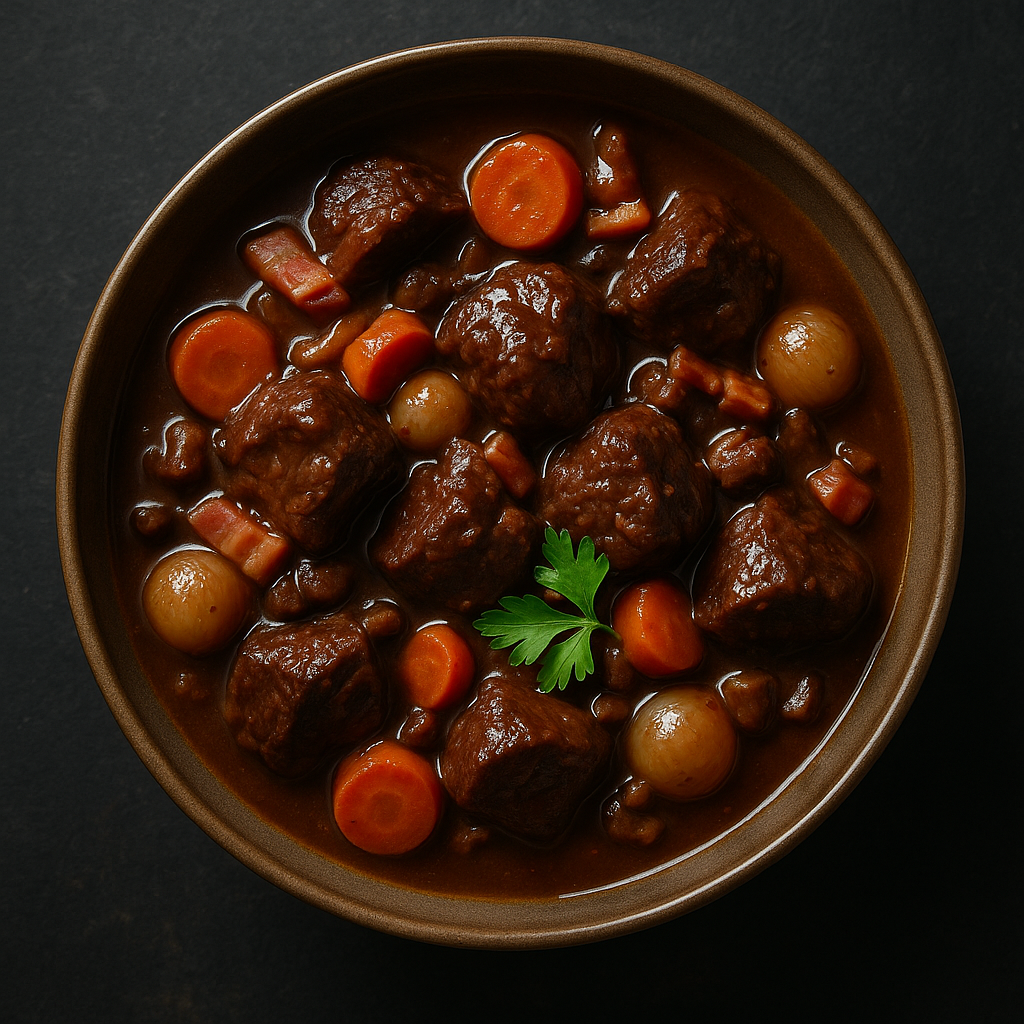
Beef bourguignon is built on wine to begin with. The meat braises for hours in red wine, thickened by lardons, mushrooms and a whisper of caramelized onion, so by the time it hits the table the sauce carries fat, salt and a deep, earthy sweetness all at once. That combination needs a wine with enough acidity to cut through the richness, but also enough fruit to keep pace with the sauce's own wine-soaked depth.
Tannin matters here too, though not too much of it. The beef is tender, almost falling apart, so a wine with harsh, drying tannins will fight the texture instead of complementing it. What works is fruit that stays bright even next to slow-cooked flavours, and a structure soft enough to let the mushrooms and bacon fat come through rather than get buried.
That's why pinot noir has such a natural home here, since it's often the same grape that went into the pot. But there's more than one way to answer this dish, from a spicier Rhône red to a leaner Loire cabernet franc, depending on how rustic or refined you want the evening to feel.
The perfect matchThe wine that's already in the pot, poured again at the table
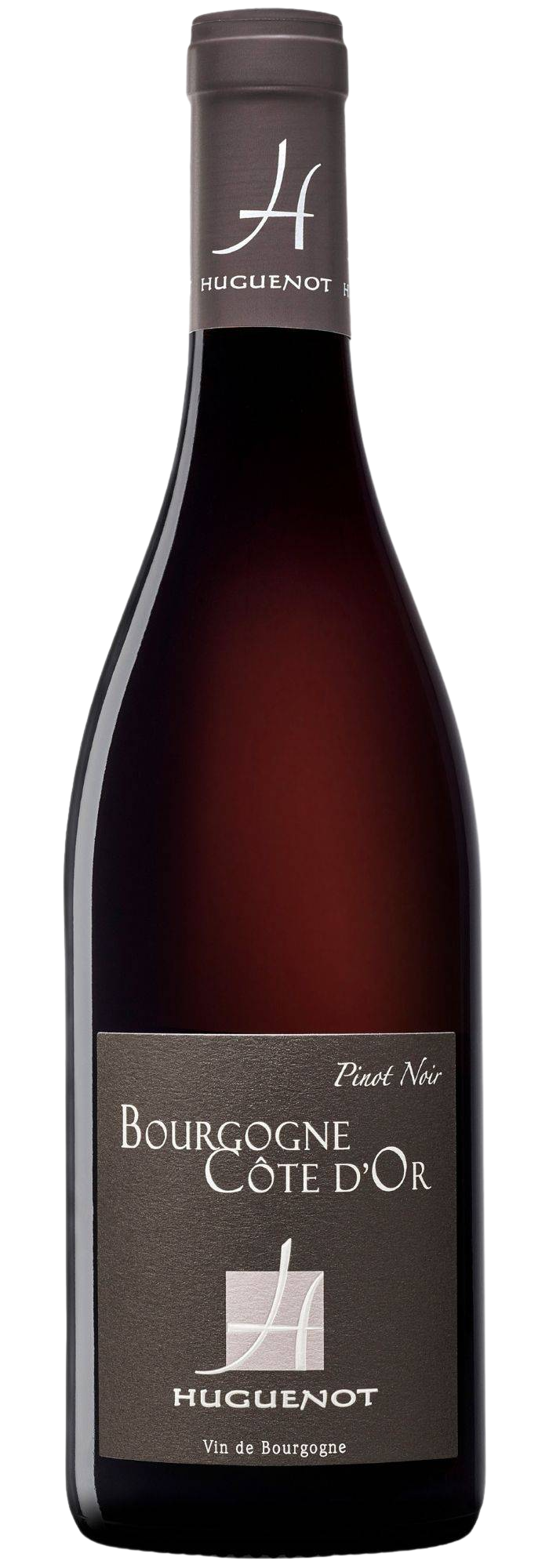
There's something satisfying about serving the same wine, or close to it, that simmered with the beef for hours. This Bourgogne Côte d'Or pinot noir has the bright cherry fruit and soft, round tannins that let it slide right into the sauce rather than compete with it. It doesn't try to outmuscle the dish, it just continues the conversation the braise already started.
What makes it work so well is restraint. The lardons and mushrooms bring plenty of fat and umami on their own, so a wine that stays light on its feet, with red fruit instead of heavy oak, keeps every mouthful feeling balanced rather than thick.
Also greatFor the night you want the stew to feel like a feast
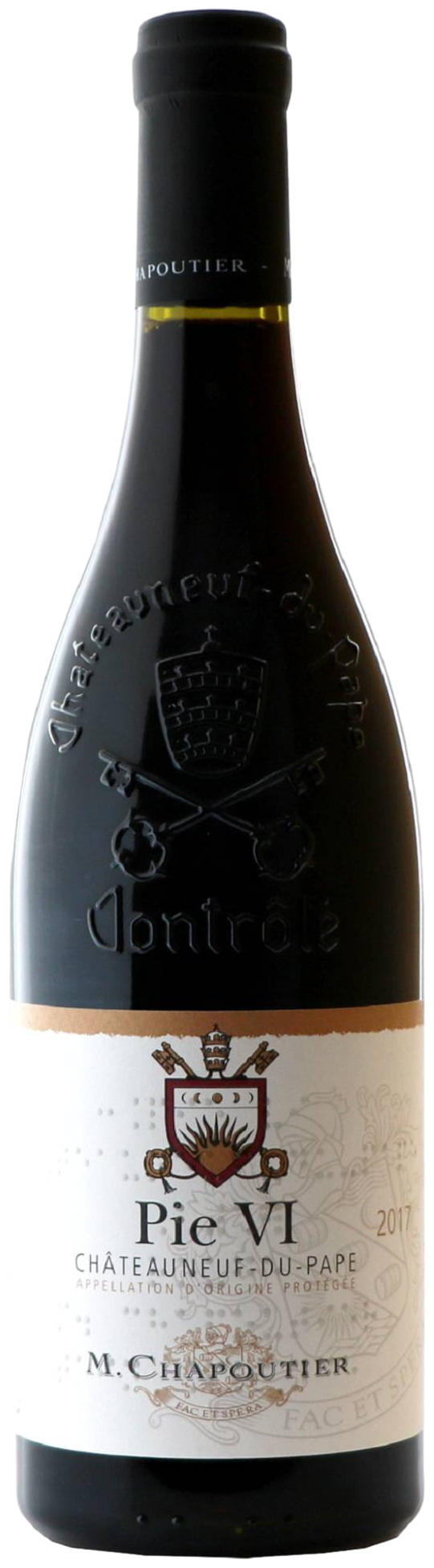
Some evenings call for more weight at the table, and that's where this Châteauneuf-du-Pape steps in. Grenache gives it a generous, sun-warmed core, while the garrigue spice and touch of syrah add a rustic edge that matches the caramelized onions and long-cooked depth of the sauce. It's a different kind of match than a Burgundy, built on warmth rather than precision.
Pour this one when the bourguignon has been on the stove all day and the kitchen smells of thyme and bay leaf. The wine's structure can carry a second helping without fading, which makes it a good choice for a table that's in no hurry to leave.
Also greatA lighter pour for a weeknight version of the classic
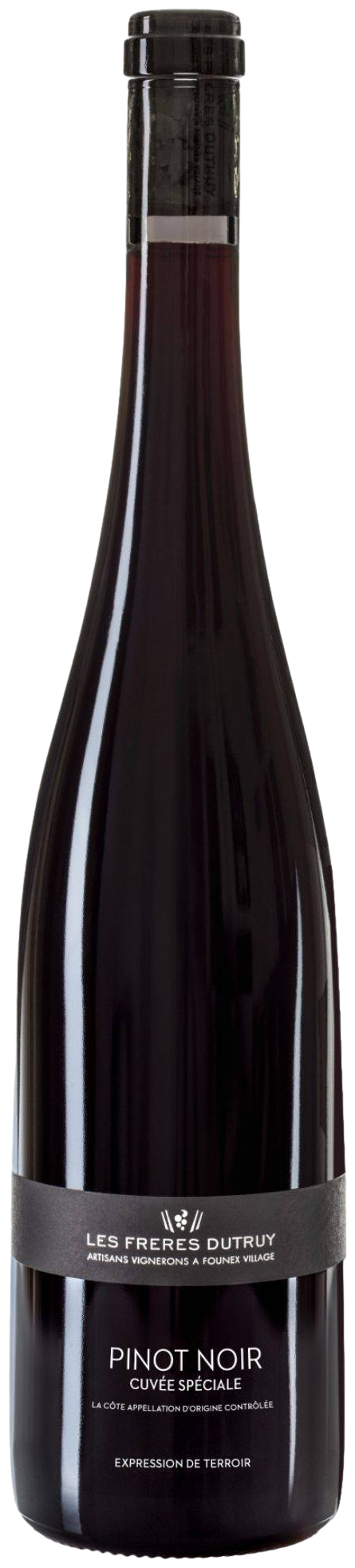
Not every bourguignon needs to be a production. This Swiss pinot noir from La Côte brings red-berry freshness and a peppery lift that keeps things feeling easy, even after a long day. It's the kind of bottle you open without ceremony, alongside a stew that's been simmering while you worked rather than one built for guests.
The lighter frame doesn't mean it backs down from the dish. It just carries the meal in a different direction, favouring brightness over depth, so the meal feels less heavy at the end of the evening.
Also greatA fresher, herbal angle on the same braise
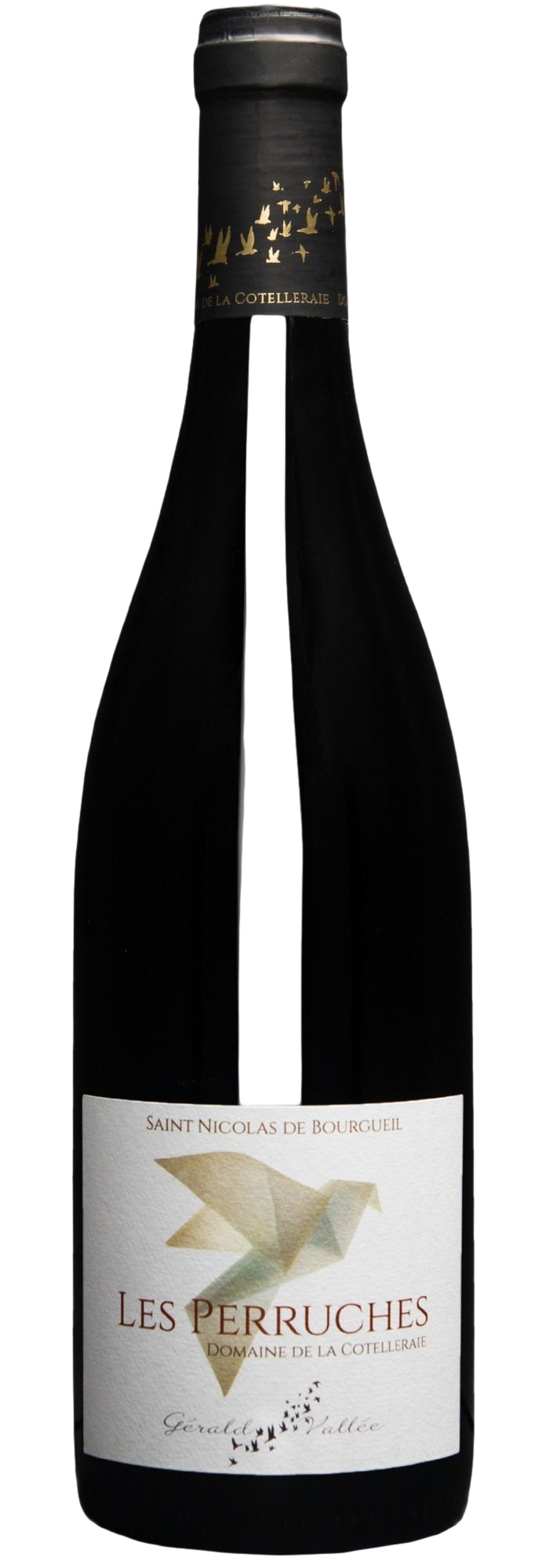
Cabernet franc from Saint-Nicolas-de-Bourgueil brings something the other reds here don't: a green, herbal edge alongside silky red fruit. That brisk acidity cuts straight through the bacon fat and braised beef, giving the dish a lift instead of letting it settle into pure richness.
It's a good pick if you find bourguignon can sit heavy by the second glass. The Loire's cooler character keeps the wine lively from the first sip to the last, which makes it an easy match for a table that leans toward lighter, fresher food most nights.
The smart pickAn easy weeknight bottle that still holds its own
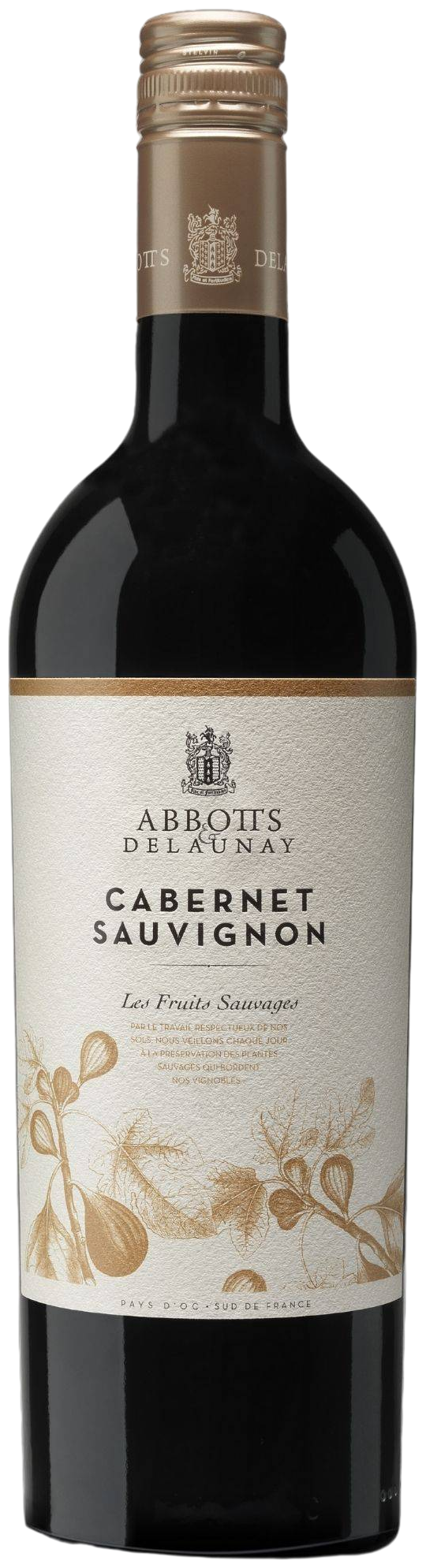
This Cabernet Sauvignon from the Coteaux du Languedoc is built for exactly this kind of meal: soft tannins, dark fruit, and enough warmth to stand up to a rich, slow-cooked sauce. It costs noticeably less than the other bottles here, which makes it an easy one to open on a Tuesday without a second thought.
What it delivers is generosity. The sun-warmed fruit meets the meaty depth of the stew head-on, so you're not trading away flavour just because the bottle is more affordable.
Treat yourselfWhen the bourguignon deserves its own occasion
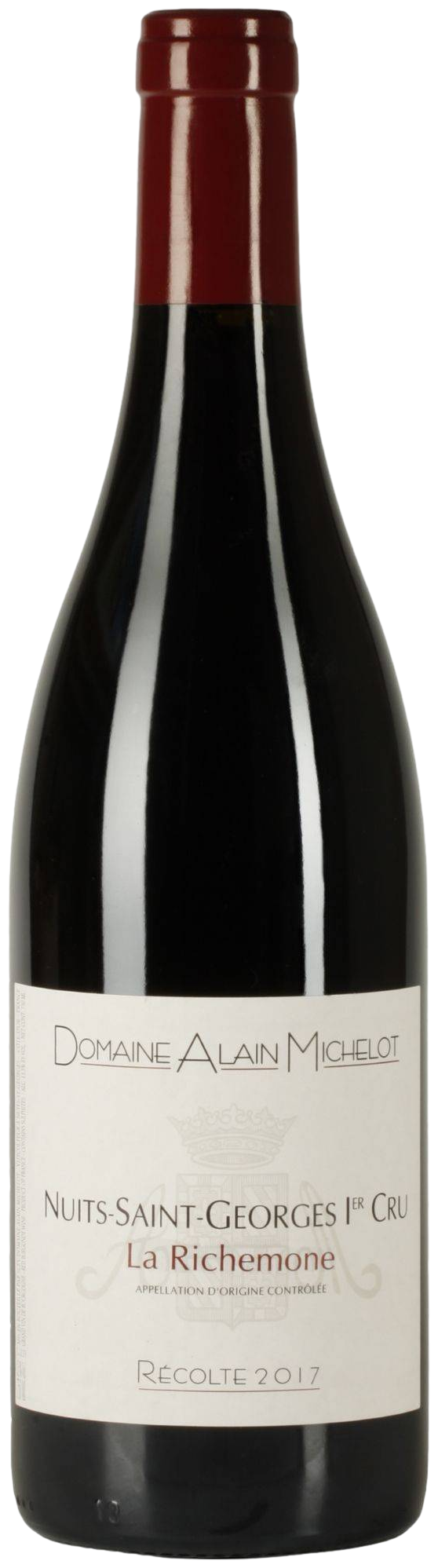
A Nuits-Saint-Georges 1er cru turns this simple stew into something worth lingering over. The silky depth and layered cherry-and-earth character bring a complexity that a everyday bourguignon rarely gets paired with, and the firmer structure holds up beautifully against the beef's long braise.
Open this one for a birthday dinner or a quiet celebration, when you want the wine itself to be part of the occasion rather than just the accompaniment. It rewards a slower pace, a bit of conversation between courses, and maybe a second glass once the plates are cleared.
We hope our selection helped you land on the right bottle for your beef bourguignon. This is a dish built for a table that lingers, family arguing over the last spoonful of sauce, friends refilling each other's glasses without asking. Once the pot lands on the table, reaching for a bottle is the easy part. Snap a photo of what you poured and tag us, we like seeing which one made it to your table.
Frequently asked questions
Should I serve red or white wine with beef bourguignon?
Red, without much debate. The dish is built on a red wine braise, rich with beef fat and mushroom umami, and needs a wine with enough tannin and fruit to stand next to that weight. A white, even a full-bodied one, tends to get lost or taste sour against the sauce.
Is pinot noir really the best grape for this dish, or should I go bigger?
Pinot noir is the classic answer because it mirrors the wine used in the braise, but it's not the only route. A Châteauneuf-du-Pape built on grenache and syrah brings more warmth and spice for a heartier version of the stew, while a Loire cabernet franc goes leaner and herbal if you want freshness over power.
The sauce is quite rich and fatty, does the wine need a lot of acidity?
Yes, acidity is what keeps each bite from feeling heavy. Wines like a Bourgogne pinot noir or a Loire cabernet franc carry a natural brightness that cuts through the lardon fat and caramelized onions, so the sauce tastes deep rather than dense.
What if one guest really wants white wine at the table?
Beef bourguignon doesn't leave much room for white, since the dish's richness needs red's structure and fruit. If someone insists, steer them toward a lighter red instead, like the Swiss pinot noir here, which has enough freshness to feel like a compromise without breaking the pairing.
Can I open a Rhône wine instead of a Burgundy for this dish?
Absolutely, and it changes the mood rather than the success of the match. A Châteauneuf-du-Pape brings garrigue spice and grenache warmth that suit a more rustic, wintery version of the stew, where a Burgundy pinot noir stays closer to the dish's own roots.
More pairings in Beef
You have the ideas.
We have the perfect wine.
Tired of overthinking your wine choice? Just tell us in a few words why you need a bottle and we'll find the perfect wine in under a minute.