Bierzo, Spain's rising wine star

The history and wine culture of Bierzo
As is often the case in Spain, we owe the first vines planted in Bierzo to the Romans. When Julius Caesar's crew arrived in the province of León in the 1st century, they immediately spotted this protected basin between Galicia and Castile, with its gentle slopes, waterways and mild climate. Production was organized to supply the legions and the many workers at the nearby Las Médulas gold mines, now a UNESCO World Heritage Site.
In the Middle Ages, Cistercian monks and pilgrims crossing the region along the Camino de Santiago took over. Monasteries multiplied their parcels, refined winemaking techniques and Bierzo wine was already widely traded throughout the Iberian Peninsula. For several centuries, the region supplied a significant portion of the wines consumed in northwestern Spain.
Then came the phylloxera disaster at the end of the 19th century. Bierzo was devastated, like the rest of Europe's vineyards, but its reconstruction was patchy. For much of the 20th century, the region remained a territory of cooperatives focused on mass-market wine, sold in bulk and diluted into large anonymous volumes, with no real identity or quality ambition.
Everything changed in the 90s. A handful of producers began to look differently at the local heritage, particularly those old Mencía vines planted on the steep slopes of Alta Bierzo, often centuries old, which the large wineries had neglected. The arrival in 1998 of Alvaro Palacios and his nephew Ricardo, who founded Descendientes de J. Palacios in the village of Corullón, marked the real turning point. Other figures jumped on board: Raúl Pérez, Dominio de Tares, Losada Vinos de Finca, and the legendary Pittacum estate. International critics turned their attention to the region, scores climbed and Bierzo became Spain's new rising star.

Today, Bierzo is considered one of the country's most dynamic regions, capable of producing wines that rival great Burgundy crus in finesse while maintaining their distinctive Iberian personality. An impressive trajectory for a region that, 30 years ago, struggled to sell its bottles beyond the province of León.
Sub-zones and wine classification in Bierzo
Bierzo is far from a uniform block. It's divided into 2 parts: Alta Bierzo and Baja Bierzo, the upper and lower parts of the region.
Unsurprisingly, Alta Bierzo is located in the mountains, to the west and northwest. The vineyards climb to 800 meters altitude, set on slate and schist soils typical of the Galician Massif. The climate is cooler, nights remain fresh even in summer, and these conditions produce wines of great tension, with fine tannins and vibrant acidity. This is where the most sought-after old parcels hide, often planted on terraces, sometimes on slopes exceeding 40%.

Baja Bierzo occupies the plains around Ponferrada, the regional economic capital. The soils shift to clay and alluvial sand, altitude drops to between 400 and 500 meters and the climate becomes milder, almost Mediterranean. The wines produced here are rounder, more sun-drenched, with fleshier fruit and a softer structure.
Regulatory-wise, the Bierzo DO appellation was officially created in 1989 and now covers 23 municipalities. For nearly 30 years, it functioned like most Spanish Denominaciones de Origen, with a classification based on aging time (Joven, Crianza, Reserva, Gran Reserva).
But in 2017, Bierzo took a historic step by adopting a parcel-based classification inspired by Burgundy, a first for Spain. Concretely, the appellations now stack up in 4 levels of increasing prestige. On the first floor, Vino de Villa designates wines from a single municipality. Just above, Vino de Paraje is produced from a specific lieu-dit. Next comes Viña Clasificada, equivalent to a Burgundy premier cru, from a parcel identified for its superior quality. And at the top of the pyramid, Gran Viña Clasificada plays the role of grand cru, reserved for exceptional parcels with very strict yield and aging rules.
If you see a lieu-dit or parcel mentioned on a bottle's label, it's generally a mark of quality. This ambitious approach has largely contributed to elevating Bierzo to the level of Spain's best appellations on international markets, and now inspires other DOs to revise their own systems.
The grape varieties of Bierzo
Bierzo cultivates a handful of grape varieties, but two dominate and concentrate most of the attention.
Mencía
Mencía is the local star. It alone occupies nearly 75% of the region's red plantings. Long considered a rustic grape barely good enough to produce plonk, it was completely rehabilitated from the 90s onwards thanks to patient work on old vines, reduced yields and more precise winemaking.
Mencía produces wines that are both powerful and elegant. On the nose, you'll find a very pronounced floral signature (violet, peony), a beautiful structure of red and black fruits (cherry, raspberry, blackberry) and sometimes a hint of garrigue herbs. On the palate, the tannins are silky, the acidity well present and the finish often saline, marked by the slate soils of Alta Bierzo. Mencía has nice aging potential, so don't rush to open the good bottles.

If you're not a fan of the sometimes imposing richness of Tempranillo, here's an ideal gateway to Spanish reds in a more tense, more Atlantic style, closer to a Burgundy Pinot noir than a classic Rioja.
Godello
Godello (pronounced Godéyo, Spanish-style, olé!) originates from the neighboring region of Galicia. Winemakers historically struggled to master it, to the point that it nearly disappeared completely from the landscape in the 1960s.
In the 1970s, a handful of Galician producers attempted to save the grape, with some success. Godello is now the second most cultivated white grape in Spain and clearly the most popular for Bierzo whites.

Godello can be aged in stainless steel tanks, for a tense, mineral style, all about freshness, or in barrels, for a fuller style, with generous texture and toasted notes. In both cases, you'll find the pronounced minerality of the terroir, supported by beautiful salinity and an acidic structure that gives length. The bouquet often plays on white flowers, acacia, citrus (lime, grapefruit) and white fruits (apple, pear). Serve it between 8 and 10°C to avoid crushing the aromatic finesse.
Other grape varieties
Besides these 2 stars, Bierzo has a few complementary grapes worth exploring.
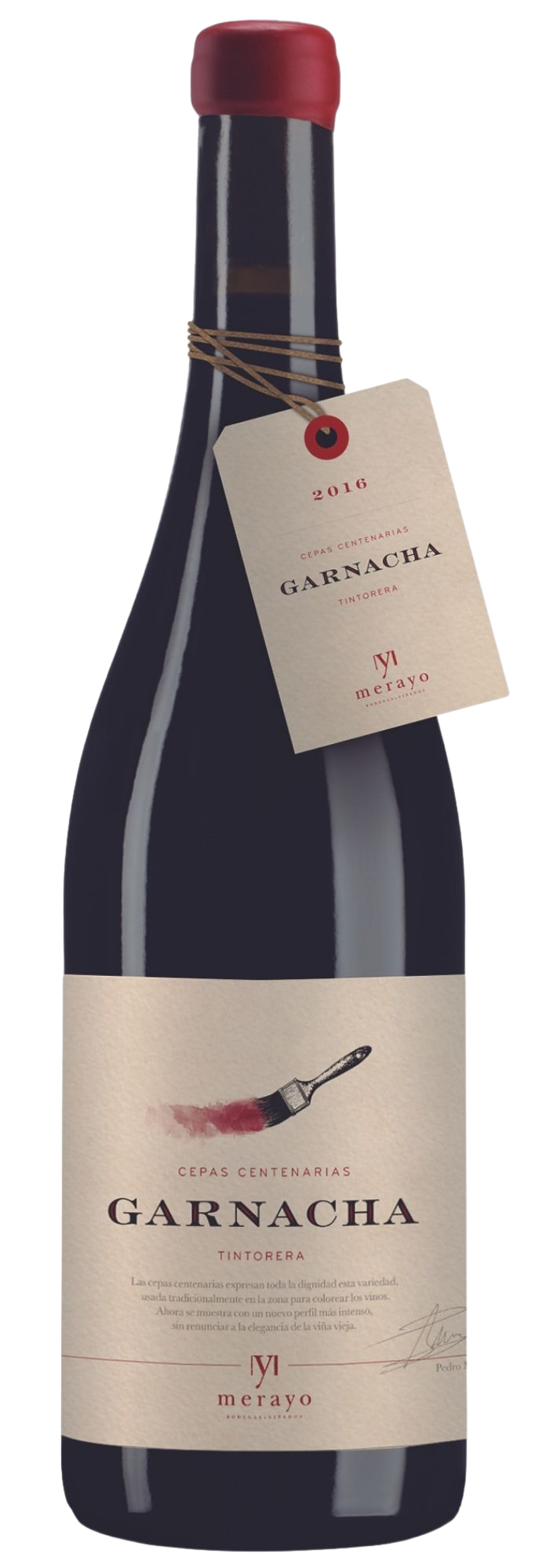
Garnacha Tintorera, also known as Alicante Bouschet, is a teinturier grape with red juice that sometimes blends with Mencía or produces powerful and deeply colored single-varietal wines. It brings structure, black fruit and extra intensity to the cuvées.
Doña Blanca and Palomino, both white, are historic grapes that are becoming rare but that some winemakers are reintroducing in more confidential cuvées. Doña Blanca gives fresh and floral wines, Palomino plays more on oxidative and saline notes when well crafted, with a nod to Jerez wines.
Portrait of Bodegas Merayo, our Bierzo winery
On Tasters, Bierzo is represented by Bodegas y Viñedos Merayo, a family winery based in Priaranza del Bierzo, in Baja Bierzo, but which also cultivates some parcels at altitude in Alta Bierzo.
The Merayo family has owned vines for 3 generations, but the serious adventure began in 2010, when Pedro was joined by his son Juan. Father and son decided to stop selling grapes in bulk to cooperatives and create their own winery, to fully exploit the incredible potential of their terroirs.
Today, Bodegas Merayo cultivates about thirty hectares, including a significant portion of old Mencía vines planted on slate slopes. The house philosophy is simple: work the entire cycle in-house, from vineyard to bottle, with minimal inputs and custom aging for each cuvée. Yields are deliberately low, parcel-based winemaking is favored, and the house signature combines generous fruit, Atlantic freshness and silky tannins.
Julien Vogel, who selected Merayo's wines with us, sums up the approach well: "A very nice complexity/pleasure ratio at a very gentle price. Fruit, freshness, a real moreish quality."

Other names to know in Bierzo
Bodegas Merayo is obviously not alone in writing the modern history of Bierzo. We can't talk about the region without mentioning 3 other houses that have contributed, each in their own way, to its renaissance.
Descendientes de J. Palacios is probably the winery that has done the most to change the world's view of Bierzo. Founded in 1998 in Corullón by Alvaro Palacios, already a star of Priorat, and his nephew Ricardo Pérez, it immediately focused on old Mencía vines planted on the slate slopes of Alta Bierzo. Their parcel-based cuvées, notably La Faraona and Moncerbal, are now considered absolute references of the appellation and serve as models for an entire generation.
Raúl Pérez is the region's enfant terrible. A winemaker from Valtuille, he worked for the family winery for a long time before flying solo in the early 2000s. A proponent of low-intervention winemaking and passionate about forgotten terroirs, he produces wines in both Bierzo and neighboring Galicia that regularly turn the heads of international critics. His Ultreia Saint Jacques is a magnificent gateway to his vision.
Dominio de Tares, founded in 2000 in San Román de Bembibre, embodies the classic and precise school of Bierzo. The winery works with more recent but carefully chosen vines, and its Bembibre cuvée, aged in new barrels, is among the most acclaimed Mencías for export. A very good reference point for anyone wanting to taste a modern, clean and accessible Bierzo.
Focus on our Bierzo wines
Aquiana 2017, the deep Mencía
Aquiana is Bodegas Merayo's premium cuvée, named in homage to the ancient Roman city of Aquiana, nestled near the famous Las Médulas gold mines. From old Mencía vines cultivated at altitude in Alta Bierzo, it benefits from longer barrel aging to develop its full complexity.
The nose opens on ripe cherries and intense floral notes, with black licorice, peppery spices and a touch of clove. On the palate, the wine is voluminous and velvety, with ripe tannins that maintain beautiful freshness. The fruit marries perfectly with the woody touch and that distinctive mineral character that marks the best Mencías of the region. The finish is deep, complex and decidedly long.
A wine made for characterful dishes: grilled lamb chops, roast duck or a hearty beef stew. Decant it at least an hour before serving between 16 and 18°C to let these complex aromas fully develop.
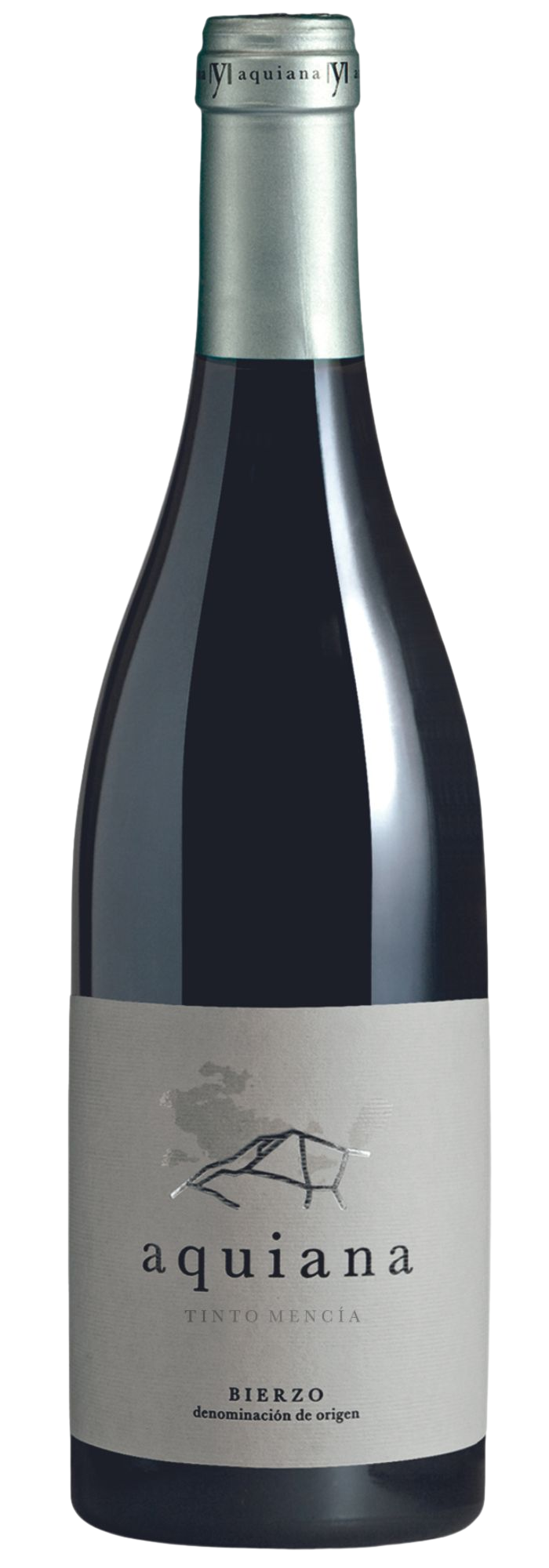
Spain • Castilla y León • Bierzo DO
El Llano 2018, the expressive Mencía
El Llano is Bodegas Merayo's flagship parcel cuvée. This intense and lively red captures the essence of an exceptional Baja Bierzo terroir, where ripe fruits meet elegant minerality that tells the story of its vines.
On the nose, you discover a complex bouquet of ripe black and red fruits, enhanced by floral notes of violet and a balsamic touch. On the palate, the tannins are round and silky, coating the palate with beautiful voluminous structure. The balance between generous fruit, subtle woody aromas and that characteristic slate minerality creates a long and persistent finish that won't leave you indifferent.
This characterful Mencía pairs very well with duck breast with cherries or a grilled beef rib. Decant it an hour before serving between 16 and 18°C so it can fully express itself.
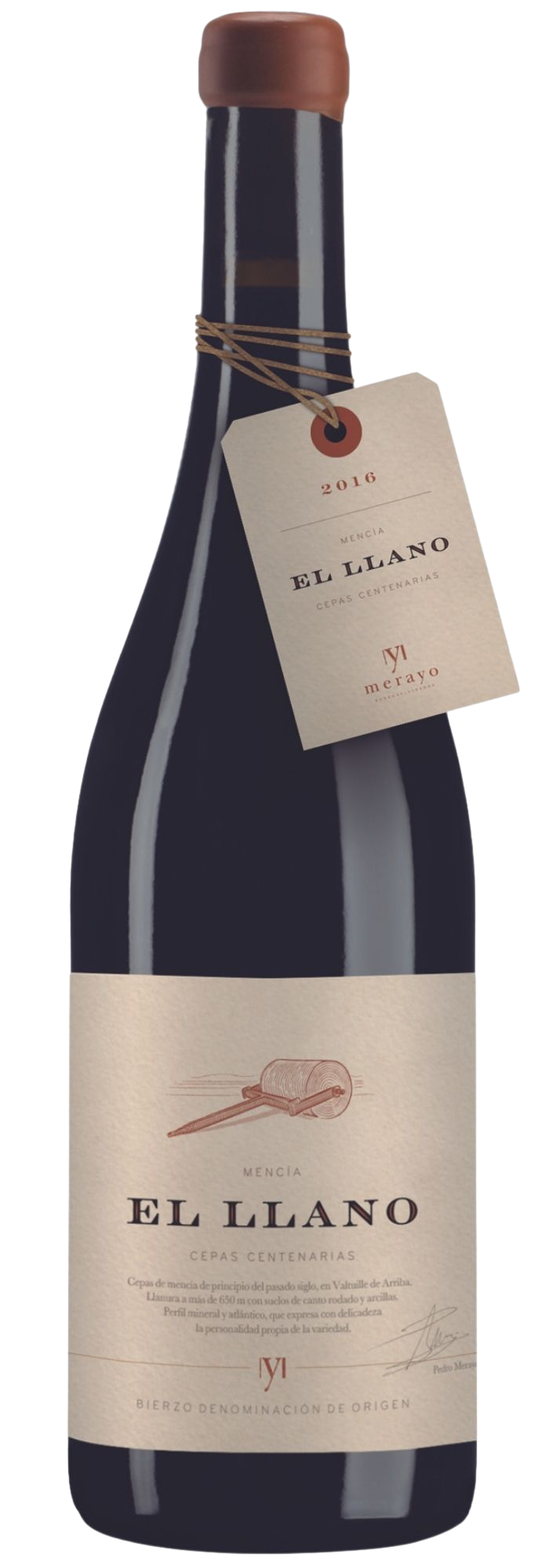
Spain • Castilla y León • Bierzo DO
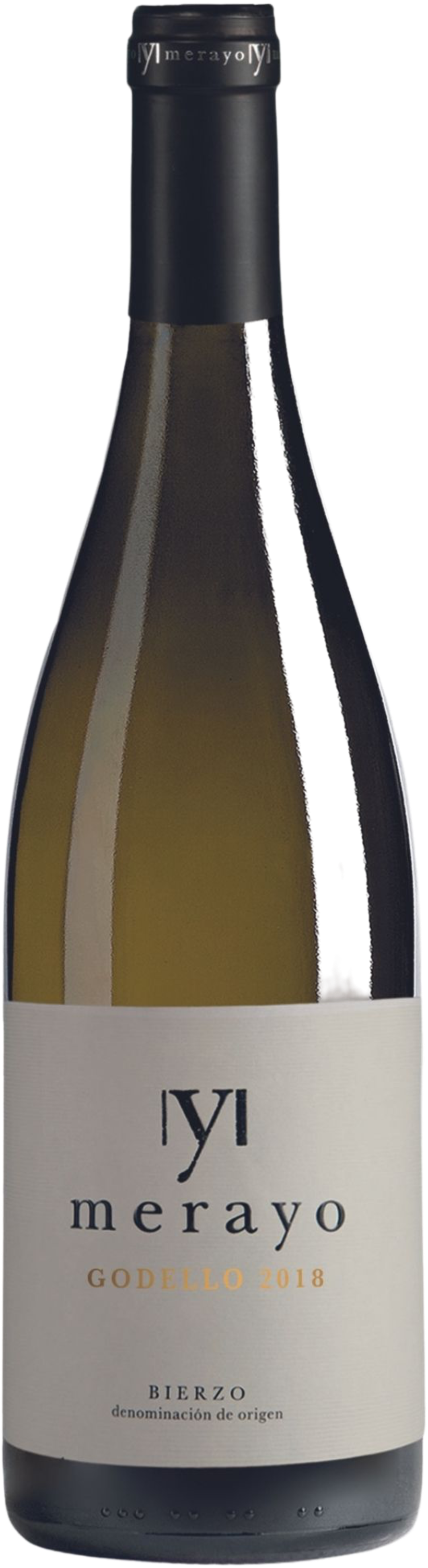
Godello 2022, Bierzo's mineral white
Bodegas Merayo's Godello 2022 is vinified in stainless steel tanks to preserve all the freshness and tension of the grape. It comes from hillside parcels cultivated at an altitude that guarantees cool nights and beautiful aromatic maturation.
In the glass, it displays a beautiful pale yellow color with green reflections. The nose plays on subtlety, with a floral bouquet of white flowers and hawthorn, supported by citrus notes (lime, grapefruit) and white fruits (apple, pear). On the palate, the attack is lively, the minerality well marked and the salinity omnipresent, like a signature of the slate terroir and Atlantic climate. The finish is long, saline, chiseled, with that little moreish quality we love.
Guía Peñín awarded it a very nice 90/100, and when tasting, we quickly understand why: this Godello checks all the boxes of a great terroir white at a price that remains very accessible.
Spain • Castilla y León • Bierzo DO
Food and wine pairings from Bierzo
Bierzo wines are formidable table companions, because they know how to be powerful without ever overwhelming dishes. Their pronounced acidity and silky tannins make them particularly versatile at the table.
Mencía, in red, loves fairly rich white meats (roast poultry, guinea fowl, pigeon), ducks and duck breasts, as well as Iberian pork dishes like presa or secreto. It also works very well with a beautiful thin-crust pizza topped with charcuterie, or with a butternut squash risotto whose sweetness will respond to the wine's liveliness. For cheese, aim for young semi-hard cheeses and hard sheep's milk cheeses (young manchego, ossau-iraty).
With a regional Swiss dish, Mencía can pleasantly surprise: its fresh and floral profile pairs surprisingly well with papet vaudois, the cabbage sausage bringing just enough fat to embrace the tannins.
Godello, in white, is the perfect companion for seafood and fish. Galician-style octopus, clams, grilled sea bass or simply some oysters as an aperitif suit it perfectly. Its salinity also works wonders with tapas, roasted vegetables, asparagus risottos and more elaborate vegetarian dishes. For a touch of exoticism, try it with a shrimp Pad Thai: the wine's acidity cleanses the dish and highlights the grape's citrus notes.
As an aperitif, a well-chilled Godello with a platter of mild cheeses and Bellota ham remains a safe bet, simple and devastatingly effective.
Continue your exploration of Spanish wines
Finished touring Bierzo? You still have much to discover about Spanish wine. You can continue your journey with Rioja, the historic appellation where Tempranillo has reigned supreme for centuries, or head to the banks of the Duero to discover Ribera del Duero and its reds of rare intensity.
Further east, Catalonia offers you a unique playground between Cava, Priorat and Penedès. And if you like characterful wines from more contrasting climates, Navarre is worth the detour with its lively reds and rosés.
For an overview of the country and all the regions we cover, check out our guide to Spanish wines. And if you'd rather taste Bierzo than read about it, subscribe to Tasters Explorer to receive our selections at home and discover the taste of adventure.