
Ribera del Duero, the quintessence of Tempranillo

The history of wine in Ribera del Duero
The wine history of Ribera del Duero goes back over 2,000 years, to Roman times. A particularly striking piece of evidence: in 1972, a magnificent 3rd-century Roman mosaic depicting Bacchus, the god of wine, was discovered in Baños de Valdearados. Proof, if any were needed, of the importance of wine in the region long before modern Spain.
In the Middle Ages, Cistercian and Benedictine monks took over. They planted, vinified, and stored wine in their underground cellars, the famous bodegas-cuevas dug beneath the villages, some of which still exist today. At that time, it was more about everyday wine than grand crus: production served mainly local consumption and liturgy.
Everything changed in 1864, when Eloy Lecanda y Chaves founded Bodegas Vega Sicilia in Valbuena de Duero, after bringing back Bordeaux grape varieties (Cabernet Sauvignon, Merlot, Malbec) to blend with local Tempranillo. His Único cuvée would become one of the most coveted wines in the world and marked the birth of the "modern" Ribera del Duero.
The region then entered a long period of dormancy. For nearly a century, apart from Vega Sicilia, production remained largely under the radar, dominated by cooperatives. The awakening came in 1972, when a certain Alejandro Fernández created Tinto Pesquera. His modern style and quality-to-price ratio caught the attention of Robert Parker, who ranked it among the world's greatest wines in the 1980s. That was the kickoff for the entire region.
The denominación de origen (DO) was officially created in 1982, with around thirty member bodegas. Today, there are over 300, and Ribera del Duero ranks among Spain's most dynamic regions. The final acceleration came in 1995, when Danish winemaker Peter Sisseck founded Dominio de Pingus in La Horra. His eponymous cuvée achieved a 100/100 from Robert Parker with the 1995 vintage, launched the era of Spanish "garage wines," and definitively placed the region on the global map.

Climate, terroir, and zones of Ribera del Duero
Ribera del Duero stretches about 115 kilometers from east to west, along the Duero River, straddling 4 provinces of Castile and León: Burgos (the most important by volume), Valladolid (where Vega Sicilia is located), Soria to the east, and Segovia to the south. This expanse gives a variety of terroirs often underestimated for what is, on paper, a single appellation.
The climate is extreme continental, with harsh winters (late frosts in May), very hot summers (over 35°C), and dry autumns. But it's above all the altitude that creates the magic of the region: the vineyards sit between 700 and 1,000 meters, making it one of the highest appellations in Spain. This altitude generates a huge day-night temperature swing (sometimes over 25°C), which slows ripening, preserves acidity, and concentrates aromas. This is the signature of great Ribera wines: that tension, that freshness beneath the power.
The soils are a mosaic: clay and limestone dominate on the surface, but you also find sand, marl, and even white chalk beds in certain zones. The best parcels are often positioned on limestone slopes where the vine must dig deep for water.
Ribera del Duero doesn't officially recognize sub-zones, but a few names come up repeatedly among enthusiasts. La Horra, a small village in Burgos, concentrates an incredible density of cult cuvées (Pingus, Aalto, Dominio del Águila are all within a few streets of each other). Roa de Duero and Aranda de Duero are the historic capitals. The Milla de Oro ("Golden Mile") refers to the most prestigious stretch along the highway, where Vega Sicilia, Pesquera, and Bodegas Peñafiel sit side by side. Soria, to the east, is home to the highest and most extreme vineyards.
The classification system: from Joven to Gran Reserva
Like in neighboring Rioja, Ribera del Duero wines are classified according to their aging period. You'll find the same major categories on labels, with a few local nuances.
Joven (young) is a wine with no barrel aging, bottled quickly after vinification. Fruity, accessible style, meant to be drunk young.
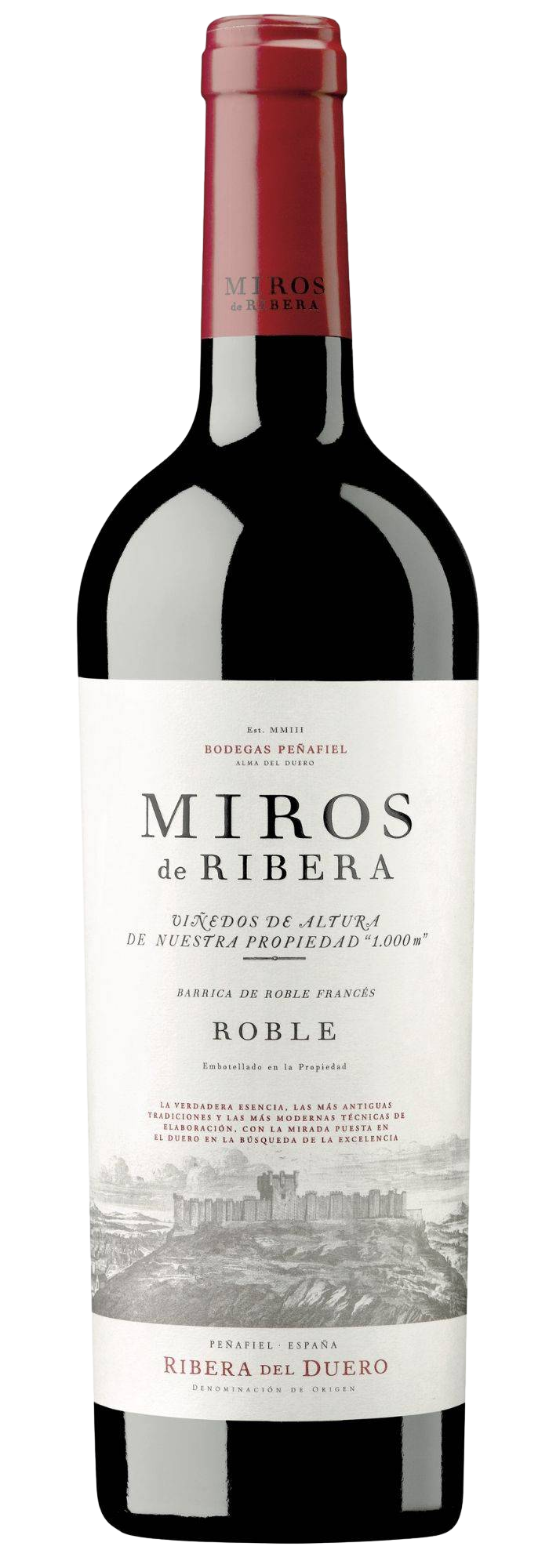
Roble is an intermediate category (rarely used elsewhere in Spain), designating wines that have spent between 3 and 6 months in barrel. A good entry point halfway between the fruit of Joven and the complexity of Crianza.
Crianza is the first official level of extended aging. The wine spends at least 12 months in oak barrels, then an additional year at the bodega before release. The quality-to-price sweet spot of the region.

Reserva steps up a notch: minimum 12 months in barrel, plus 24 additional months of maturation (in barrels or bottles) before release. This is where complexity really sets in, with the appearance of tertiary notes (leather, tobacco, sweet spices).
Gran Reserva is the summit: at least 24 months in barrel and 36 additional months of maturation, meaning a minimum of 5 years before release. Reserved for vintages deemed exceptional by the Consejo Regulador, these are very long-aging wines, built to wait in the cellar for 20 years or more.
The grape varieties of Ribera del Duero
Tempranillo (Tinta Fina, Tinto del País)
Tempranillo represents over 95% of Ribera del Duero's plantings. Locally, it goes by several names: Tinta Fina, Tinto Fino, Tinto del País. It's the same variety as in Rioja, but the expression changes dramatically.
The altitude and extreme continental climate of Ribera give a Tempranillo that's denser, darker, more structured than in Rioja. Typical aromas: blackcurrant, blackberry, plum, accompanied by spices, tobacco, and leather. The tannins are robust, the acidity well-present, the matter concentrated. It's the perfect grape for lovers of powerful, age-worthy wines.

Blending grape varieties
While the vast majority of Ribera del Duero wines are single-varietal Tempranillo, the appellation rules allow a few blending grapes as complements. Garnacha (Grenache) brings roundness and fruit. Merlot and Cabernet Sauvignon, inherited from the tradition initiated by Vega Sicilia in the 19th century, bring structure and blackcurrant notes. These blends remain in the minority but allow certain prestigious cuvées, notably at Vega Sicilia, to sign a very particular style.
Albillo Mayor, Ribera's white secret
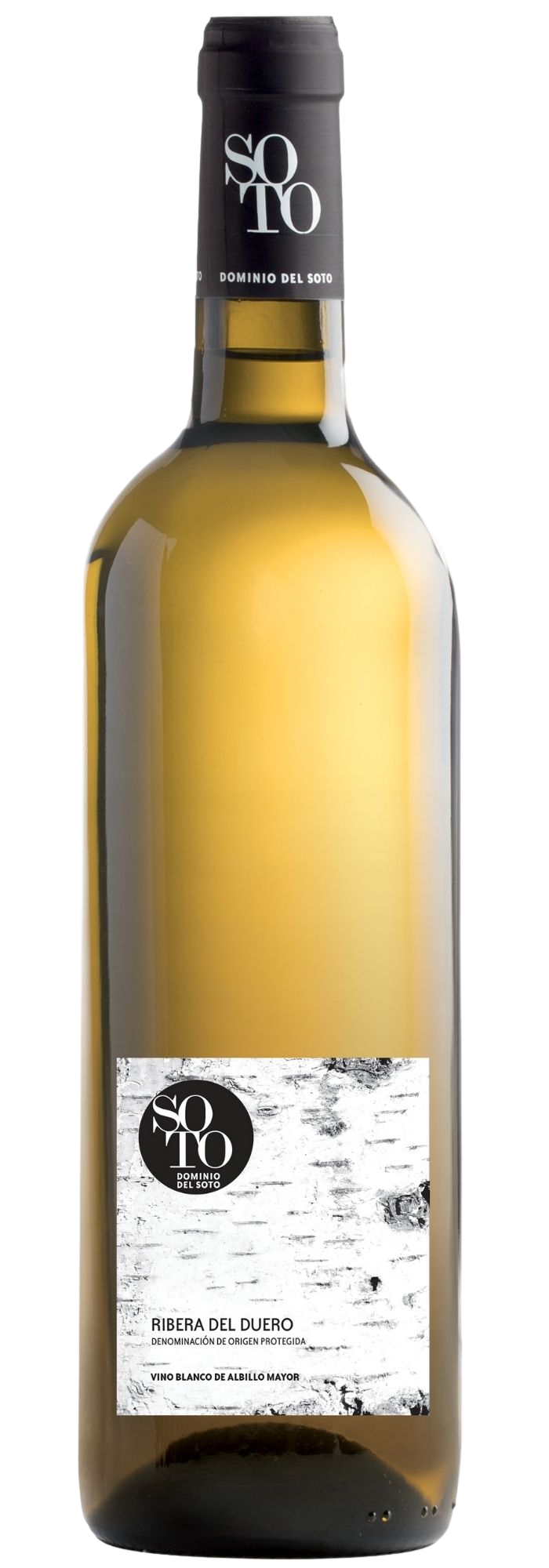
Here's the region's curiosity: while Ribera del Duero is known almost exclusively for its reds, the appellation has authorized the official commercialization of white wines under the DO label since 2019. The king grape for these whites is Albillo Mayor, an indigenous variety that has grown in the region for centuries but whose production remained until recently reserved for family consumption, brandy production, or blending with Tempranillo.
Albillo Mayor produces fresh, floral whites with beautiful texture and notes of green apple, citrus, and almond. A new generation of producers is beginning to work with it seriously, sometimes with barrel aging that can yield impressive results. If you see a white from Ribera del Duero on a wine list, don't pass it up: you've got a rarity worth exploring.

Portrait of Ribera del Duero producers
On Tasters, Ribera del Duero is represented by 2 estates, each with its own distinct personality.
Bodegas Peñafiel
Bodegas Peñafiel sits at the heart of the Milla de Oro, under the watchful eye of Peñafiel Castle. The winery controls about fifty hectares spread across 3 distinct geographic zones in the provinces of Valladolid and Burgos, within a radius of about twenty kilometers around the town of Peñafiel.
Its particularity: a large portion of the vines are over 100 years old, planted on highly calcareous soils (alkaline pH up to 9) that give the wines a very recognizable mineral signature. Altitude and climate vary from parcel to parcel, and each vineyard is harvested separately. At the helm of the winery, César Arranz Hernandez, trained under the legendary Mariano García (winemaker at Vega Sicilia for 25 years, founder of Aalto). Quite the pedigree.

Dominio del Soto, the Chapoutier project
Dominio del Soto is nestled in Sotillo de la Ribera, right in the heart of Ribera del Duero. The estate, founded in 2005, is now the Spanish project of the Chapoutier family (Hermitage, Côte-Rôtie). It was Mathilde Chapoutier, 8th generation of this wine dynasty, who fell in love with it during her travels and now runs it.
The estate's 16 hectares are farmed organically, with ongoing conversion to biodynamics. The vines are planted on old terraces between 850 and 900 meters altitude, on deep clay-limestone soils. The philosophy is clear: let the terroir speak, with manual harvests, fermentation in concrete tanks, and aging in French oak. Bonus: the estate also produces a white Crianza from Albillo Mayor, a rarity in a region obsessed with red.

Other great estates to know
Bodegas Peñafiel and Dominio del Soto are obviously not alone in writing the history of Ribera del Duero. You can't talk about the region without stopping at 3 estates that each embody, in their own way, its qualitative summit.
Vega Sicilia is quite simply Spain's most mythical bodega. Founded in 1864 by Eloy Lecanda y Chaves in Valbuena de Duero, it has weathered regimes, crises, and trends without ever losing its course. Their flagship cuvée, Único, is aged for 10 years (yes, 10) between barrel and bottle before being released. Each vintage is awaited like an event by enthusiasts worldwide, and bottles sell for several hundred francs upon release. Valbuena 5° (nothing to do with the footballer), aged 5 years, is the more accessible little brother (but not really).

Dominio de Pingus catapulted Ribera del Duero into another dimension in 1995. Peter Sisseck, a young Danish winemaker, bought a few hectares of very old Tinto Fino vines in La Horra and produced a Pingus 1995 that Robert Parker rated 100/100. It was the dawn of the Spanish "garage wine" era. Today, Pingus sells for over 1,000 francs a bottle. Sisseck has since created other more accessible cuvées (Flor de Pingus, PSI), all signed with the same precise, mineral touch.
Tinto Pesquera was the trigger that awakened the entire region. When Alejandro Fernández created the winery in 1972, Ribera del Duero was moribund. His modern, fruity, and accessible style caught Robert Parker's attention in the 1980s, who compared his Pesquera Reserva to Pétrus. Success was immediate and the region exploded. Even today, Pesquera wines rank among the most recognized Spanish wines internationally and continue to regularly receive scores above 95 from major critics.
Spotlight on our Ribera del Duero wines
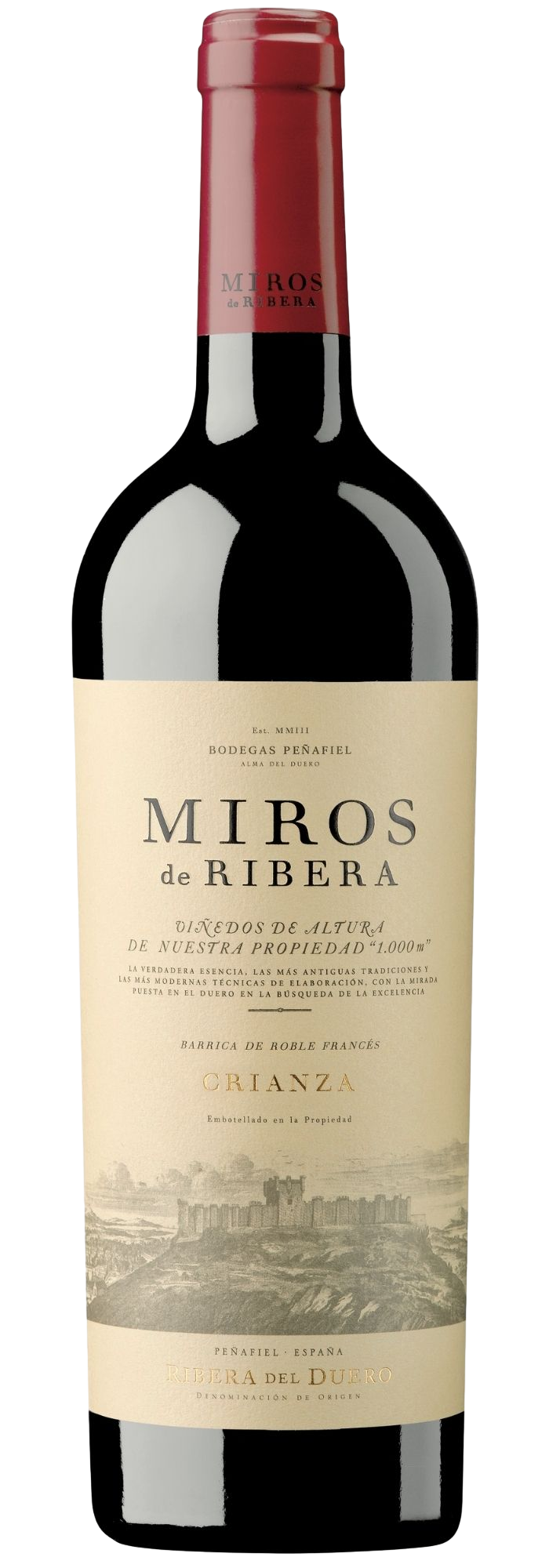
Miros de Ribera Crianza 2019, canonical Tempranillo
Miros de Ribera Crianza 2019 is the most representative cuvée of Bodegas Peñafiel's know-how. A pure Tempranillo, vinified from grapes from the best parcels of the Milla de Oro, aged 12 months in French oak barrels to achieve the perfect Crianza balance, in a Ribera style more taut than that of neighboring Rioja.
On the nose, the wine unfolds a beautiful bouquet of black fruits (blackcurrant, blackberry), enhanced by notes of spices, licorice, and toasted oak. On the palate, the attack is ample, the tannins are structured but silky, and the finish is long, marked by that limestone minerality found in the best bottles from Bodegas Peñafiel. An excellent entry point for understanding the Ribera del Duero style.
Spain • Castilla y León • Ribera del Duero DO
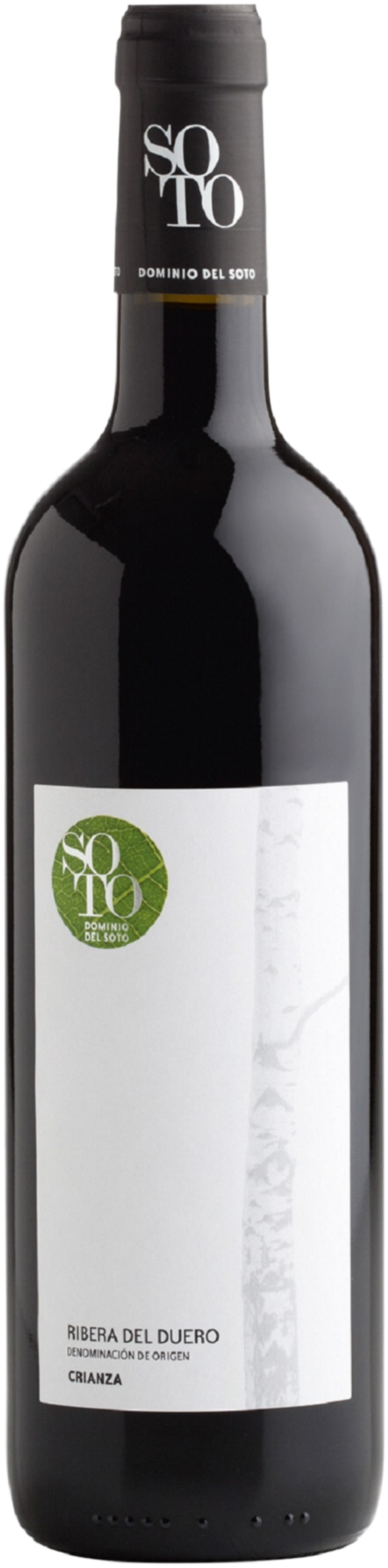
Dominio del Soto Crianza 2016, organic elegance
Dominio del Soto Crianza 2016 is the accessible signature of the Chapoutier project. A Tempranillo from organically farmed vines, aged 12 months in French oak barrels and concrete tanks, after cold maceration and 4 to 6 weeks of slow fermentation.
This is a wine that delivers, with such a blossoming bouquet: nuances of ripe black fruits, sweet spices, and noble wood, supported by a mineral structure typical of the high-altitude clay-limestone terroir of Sotillo de la Ribera. Well balanced between acidity and tannins, the wine is immediately appealing, accessible, without lacking depth. At this price, it's a gift.
Bio
Spain • Castilla y León • Ribera del Duero DO
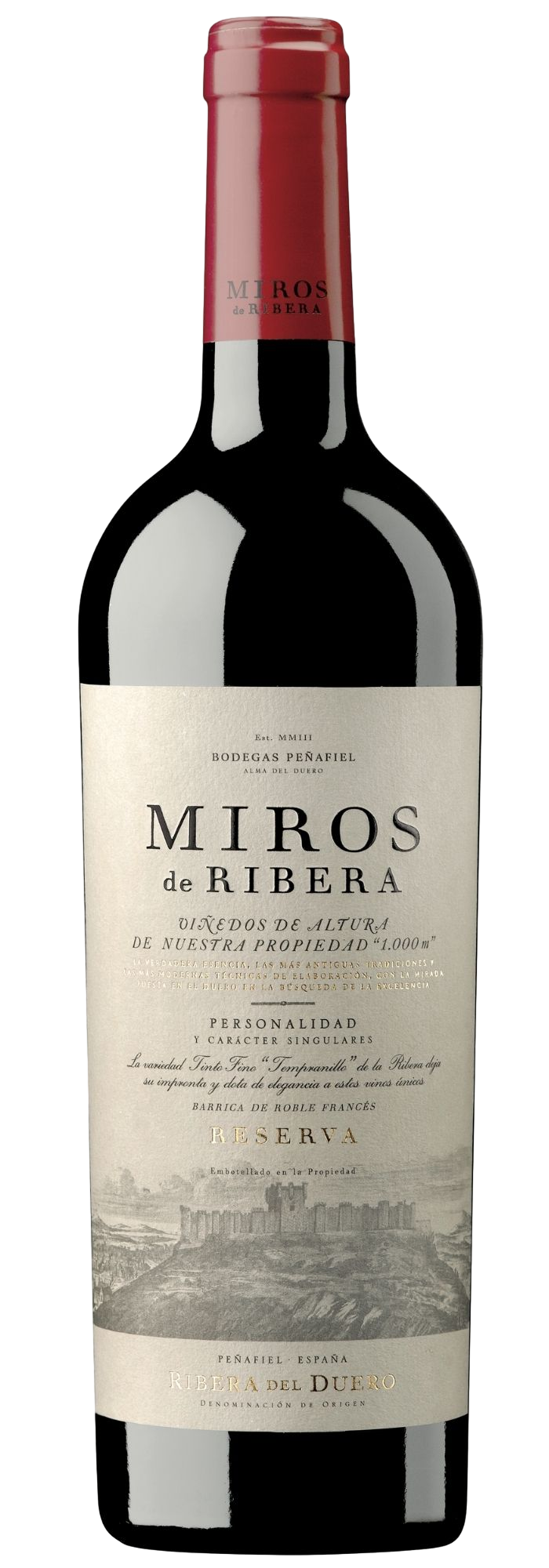
Miros de Ribera Reserva 2017, the prestige choice
For special occasions, step up a level with Miros de Ribera Reserva 2017. This cuvée is aged over 3 years in French oak barrels before release, giving it remarkable depth and aging potential of several decades.
Deep, almost opaque color, with violet reflections. On the nose, the wine reveals a complex bouquet of candied black fruits, leather, tobacco, cedar, and spices. On the palate, the matter is dense, the tannins powerful but polished by aging, the acidity well-defined, and the finish endless. A Reserva that will be spectacular right now if you decant it for 1 to 2 hours, but can also wait patiently in the cellar for 15 to 20 years.
Spain • Castilla y León • Ribera del Duero DO
Food and wine pairings for Ribera del Duero
Red wines from Ribera del Duero are magnificent table companions, but they demand dishes to match. Their power and tannic structure call for meats with character.
For Crianza, we're in the realm of great classics: grilled rib steak, duck breast, roast lamb with herbs, or butternut squash risotto whose sweetness will respond to the wine's power. On the Iberian side, pairing with Castilian suckling pig (the famous cochinillo de Segovia) is an absolute classic.

For Reserva and Gran Reserva, deeper and more complex, step up a notch: game in sauce (venison, wild boar), braised beef with spices, confit lamb, or simply a generously topped pizza with spicy sausage and aged cheeses. For cheese, aim for hard sheep's milk varieties (aged manchego, smoked idiazábal, garrotxa) that respond to the wine's tannic structure.
If you get your hands on a white Ribera del Duero made from Albillo Mayor, it will pair beautifully with grilled fish, seafood, varied tapas, or shrimp Pad Thai to enjoy the grape's saline freshness.
Continue your exploration of Spanish wines
Ribera del Duero is just one stop on your Iberian adventure. If you loved the power of Tempranillo, head over to discover Rioja, its historic big sister, where the same grape takes on a finer expression, more structured by the limestone of Rioja Alta.
For a radical change of style, Bierzo and its Mencía will offer you finer, more Atlantic reds, almost Burgundian in their elegance. Further east, Catalonia has Priorat, Cavas, and a unique wine playground in store. And if you're looking for characterful wines at gentle prices, Navarra is definitely worth the detour with its lively reds and rosés.
For an overview of the country and all the regions we cover, check out our guide to Spanish wines. And if you'd rather taste Ribera del Duero than read the theory, subscribe to Tasters Explorer to receive our selections at home and discover the taste of adventure.
Ribera del Duero DO: Discover our wines
Ribera del Duero DO
Ribera del Duero DO
Ribera del Duero DO
Bio
Ribera del Duero DO
Ribera del Duero DO