
Puglia, from Primitivo to Negroamaro del Salento

If you're looking for sunshine in your glass, you've come to the right place. Puglia, that long heel of the Italian boot stretching into the Adriatic, offers warm, generous, sun-drenched wines that capture all the energy of the south. This is the land of Primitivo, Negroamaro, and Nero di Troia, three indigenous grapes that built the reputation of a region long confined to mass production.
But over the past twenty years, a new generation of winemakers has completely changed the game. By abandoning industrial yields to focus on quality, they've lifted Puglia from its image as a cheap wine producer to make it one of southern Italy's most exciting regions. And the best part is that prices remain very gentle.

History of winemaking in Puglia
The first vines were planted in Puglia by the Messapians and Illyrians even before the Greeks arrived, who founded prosperous colonies in the region as early as the 8th century BCE. The Romans then developed viticulture on a large scale: Pliny the Elder and Horace (himself a native of the region) were already praising the merits of southern Italian wines.
In the 20th century, the region shifted massively toward volume production. Puglian wines were shipped in bulk to France and northern Italy, where they were used to beef up blends in difficult vintages. It wasn't until the 1990s, and especially the 2000s, that a new generation of producers emerged, determined to showcase the region's indigenous grapes and terroirs. Today, Puglia ranks among Italy's most dynamic wine regions.
Puglia's appellations
With 4 DOCG and 28 DOC, Puglia offers a mosaic of appellations that reflects the diversity of its terroirs, from the limestone of Tavoliere in the north to the red soils of Salento in the south.
Primitivo di Manduria DOC and DOCG
This is the crown jewel appellation of southeastern Puglia, in the heart of Salento. Primitivo di Manduria DOC produces powerful, concentrated reds, sun-soaked, with aromas of black cherry, candied blackberry, chocolate, and sweet spices. The Dolce Naturale DOCG version, made from grapes slightly dried on the vine, yields a sweet wine of great richness, perfect for ending a meal.
Primitivo di Manduria has long been drunk young for its vibrant fruit, but more ambitious cuvées, often aged in oak barrels, develop beautiful complexity with a few years of cellaring. It's the archetype of Mediterranean red: warm, indulgent, easy to love.
Salice Salentino DOC
In the heart of Salento, Salice Salentino is a historic appellation where Negroamaro reigns supreme, often blended with Malvasia Nera. The reds are fleshy, spicy, with notes of black fruits, tobacco, and a slightly bitter finish typical of Negroamaro.
The rosé version, often overlooked, is one of Italy's best-kept secrets: salmon-colored, intense, with a structure rare for a Mediterranean rosé. Absolutely worth discovering if you're looking for rosés with character, far from the pale, timid versions of Provence.

Castel del Monte DOC and DOCG
In the north of the region, around Frederick II's famous octagonal castle, the Castel del Monte appellation produces fresher wines thanks to altitude (up to 500 m) and maritime influences. The king grape here is Nero di Troia, which yields more elegant reds with fine tannins and refined structure.
Three DOCG crown the appellation: Castel del Monte Nero di Troia Riserva, Castel del Monte Rosso Riserva, and Castel del Monte Bombino Nero (a rosé DOCG, which remains very rare in Italy). If you're looking for Puglian reds with more freshness and finesse, this is where to look.
Gioia del Colle DOC
On the Murge, those limestone hills in central Puglia, Gioia del Colle is considered the historic birthplace of Primitivo. The altitude (up to 400 m) and limestone soils produce fresher, more balanced, and more complex Primitivo than those from Manduria. For many enthusiasts, this is where you'll find the best Primitivo in the entire region.
Locorotondo DOC and the whites of Valle d'Itria
Around the famous trulli, those conical stone-roofed houses, Valle d'Itria produces fresh, dry whites based on Verdeca and Bianco d'Alessano. Locorotondo DOC and Martina Franca DOC offer light whites, not very aromatic but highly drinkable, perfect for aperitifs or seafood.
The Moscato di Trani DOC appellation, further north, produces sweet wines from Moscato Bianco, while smaller DOC like Ostuni, Galatina, or Copertino make local wines worth discovering off the beaten path.
Puglia's grapes
Puglia's varietal diversity is immense, but it rests primarily on a few indigenous grapes that define the region's identity.
The emblematic reds
Primitivo is Puglia's star grape. Genetically identical to California's Zinfandel and Croatia's Crljenak Kaštelanski, it has found its finest expressions in Salento. It produces powerful wines, high in alcohol (often 14-15°), with intense aromas of black cherry, candied blackberry, chocolate, and sweet spices. Its name comes from the Latin primativus ("early"), because it ripens very early, sometimes as early as late August.

Negroamaro is the other pillar of Puglian reds. Despite the sound of its name ("black bitter"), it doesn't produce particularly bitter wines: that slightly licorice-tinged finish is actually its signature. It's a rustic grape, resistant to drought, producing fleshy, spicy wines, often punctuated with notes of tobacco, leather, and Mediterranean herbs. It also shines as rosé, where it reveals rare intensity and structure.
Nero di Troia, also called Uva di Troia, is the aristocratic grape of northern Puglia. It produces finer, more elegant wines than Primitivo or Negroamaro, with aromas of spices (cinnamon, licorice), black fruits, and a well-present tannic structure. This is the grape to watch for those seeking Puglian reds with more complexity and aging potential.
Alongside this trio, you'll find Malvasia Nera, often blended with Negroamaro to round out its tannins, and Susumaniello, a rare and promising grape from Salento that produces reds of great aromatic intensity. Aleatico, an aromatic grape with notes of rose and red fruits, is used to produce the famous sweet wine Aleatico di Puglia DOC.
Indigenous whites
Long confined to the role of mass-production grapes, Puglian whites are also experiencing a renaissance. Verdeca and Bianco d'Alessano form the base of Valle d'Itria whites: light, thirst-quenching wines with marked acidity that contrasts with the region's warm climate.
Fiano Minutolo (not to be confused with Campania's Fiano) is a rare, aromatic grape with notes of white flowers and musk, producing perfumed, elegant whites. Bombino Bianco, a traditional grape from northern Puglia, yields rounder, easy-drinking wines. Finally, Malvasia Bianca completes the palette with its aromatic notes of apple and white flowers.
International grapes
Like many Italian regions, Puglia has integrated international grapes over recent decades. Merlot and Cabernet Sauvignon are planted in the south of the region and often serve in IGT Puglia or Salento blends, sometimes alongside Negroamaro. Chardonnay, more recent, produces some interesting whites when well crafted. But Puglia's soul remains resolutely indigenous, and rightly so.
Producers to discover
Puglia has thousands of producers, from small family estates to large historic cooperatives. Here's one we follow closely at Tasters.
Tenuta Boncore
Located in San Donaci, in the heart of Salento, Tenuta Boncore is a member of the historic Cantina San Donaci cooperative, founded in 1933 by 12 visionary farmers. Today, the cooperative brings together nearly 300 members and has evolved its practices to produce increasingly focused wines, showcasing Salento's terroirs and refining its oak barrel aging techniques.
What distinguishes Tenuta Boncore is the attention paid to grape quality right from the vineyard. The estate practices a variable payment system for its growers based on the quality of harvested fruit, which encourages the best qualitative yields. The result: Primitivo and Negroamaro Salento IGT that offer some of the best quality-to-price ratios in all of Puglia.

Our favorites from Puglia
Puglian wines are among Italy's most accessible, both for their approachable style and their prices. Here are two bottles that perfectly embody the region's spirit.
Primitivo, Salento's sunny signature
Tenuta Boncore's Primitivo Salento is the archetype of Puglian Primitivo: sun-soaked, generous, with intense aromas of black cherry, candied blackberry, and a beautiful spicy touch. The alcohol is well integrated, the tannins are supple, and the indulgent finish makes you want to pour another glass right away.
It's a sharing wine par excellence, perfect for large gatherings, pizza nights, or pasta with ragù. At under fifteen francs, it's the kind of bottle you buy without thinking for everyday drinking or to accompany an Italian aperitivo with friends. Serve it at 16-17°C, or even slightly chilled in summer, and let the generosity of the south speak.
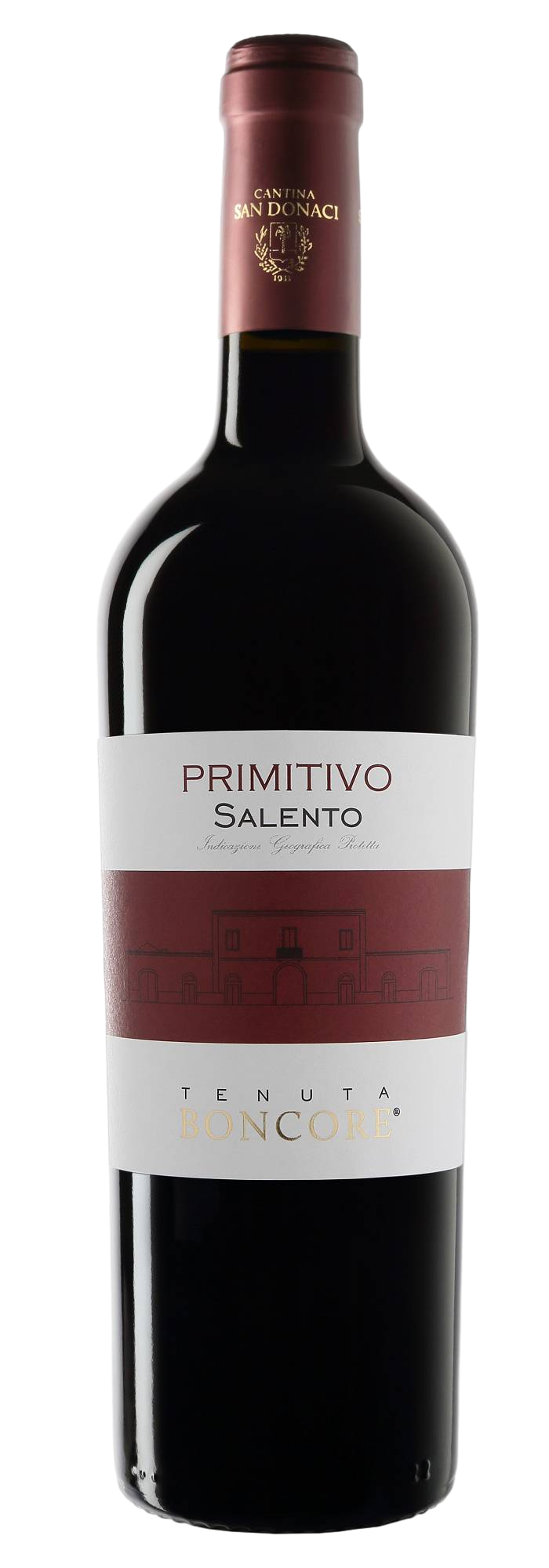
Italy • Apulia • Salento IGT
Negroamaro, depth and character
Tenuta Boncore's Negroamaro Salento IGT impressed us so much that we included it in an Explorer stage dedicated to southern Italian wines. On the nose, an intense bouquet of red berries and blackberries, punctuated with notes of cloves, cocoa, and pepper. On the palate, the wine is full-bodied, dry, with a beautiful tannic structure and that slightly licorice-tinged signature that makes Negroamaro so charming.
It's a wine that benefits from decanting and pairs beautifully with spicy dishes, sweet-and-sour Asian cuisines, or a simple Italian charcuterie board. For under fifteen francs, you get a wine with plenty of body, character, and complexity, an excellent choice for discovering what Salento can offer.
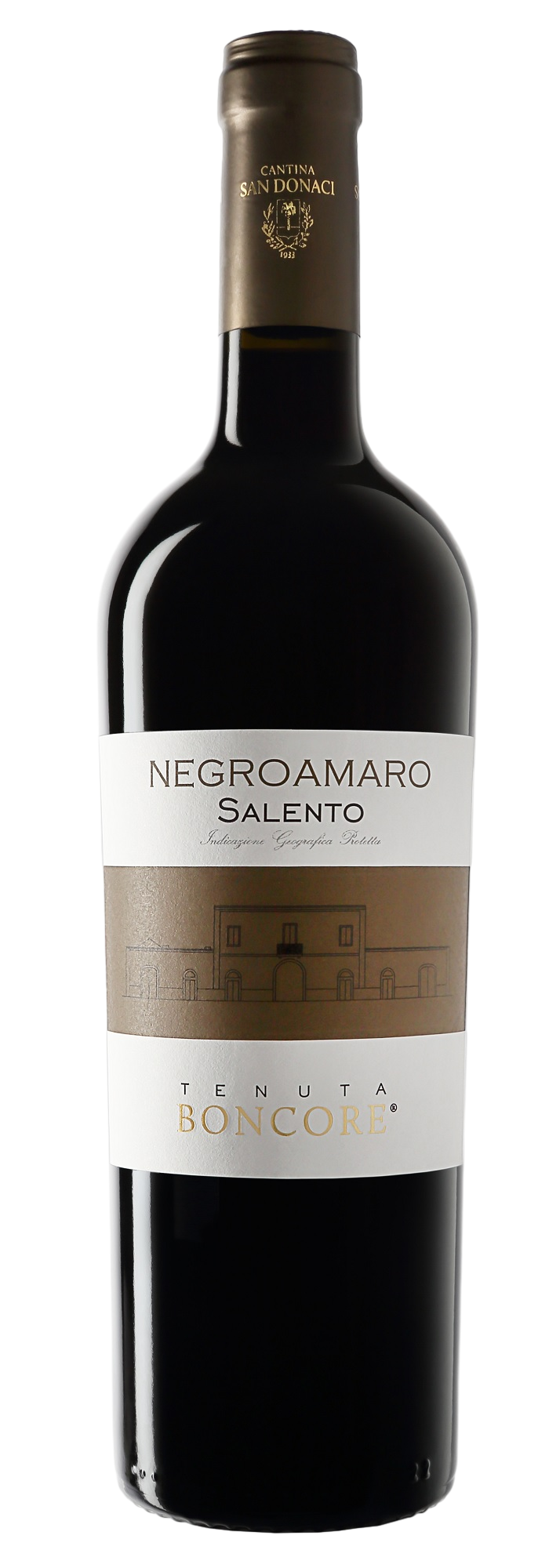
Italy • Apulia • Salento IGT
Food and wine pairings from Puglia
Puglian cuisine is one of Italy's most flavorful. Simple, generous, based on products from the land and sea, it naturally pairs with the region's wines.
Orecchiette alle cime di rapa and fresh pasta
Orecchiette, those "little ears" of fresh pasta, are emblematic of Puglia. Served with cime di rapa (turnip greens), anchovies, and garlic, they call for a dry, crisp white like Locorotondo or Verdeca. For richer versions with ground meat or spicy tomato sauce, switch to a Primitivo or Negroamaro Salento that will echo the dish's robustness.
Burrata, mozzarella, and antipasti
Puglia is the birthplace of burrata, that creamy marvel from Andria. To accompany it, forget powerful reds: a well-chilled Verdeca or a Salice Salentino rosé will perfectly balance the cheese's richness. For a heartier antipasti platter (charcuterie, olives, aged cheeses), a light Negroamaro will work wonders.

Lamb, grilled meats, and brasato
Spit-roasted lamb, braciole (rolled beef rolls), and Puglian brasato are robust classics that demand reds to match. A Primitivo di Manduria or a Nero di Troia Riserva perfectly accompany these braised or grilled dishes. For a more elegant version, a Castel del Monte Nero di Troia Riserva will bring finesse and structure.
Pasticciotto and desserts
Pasticciotto, that small pastry cream-filled cake from Lecce, calls for a sweet wine. Primitivo di Manduria Dolce Naturale DOCG, with its notes of candied black cherry and chocolate, is an ideal regional pairing. Aleatico di Puglia DOC, rarer but equally exquisite, offers a floral, aromatic alternative to conclude a meal beautifully.
Continuing the journey through southern Italy
Puglia is that promise of southern Italy: sunshine in the glass, generosity without pretension, and bottles that invite sharing without ever breaking the bank. It's a region that lends itself as much to discovery as to immediate pleasure, with that rare quality of remaining accessible while still offering real gems to those who look a bit further.
Just across the water, Sicily awaits with its volcanic wines from Etna, its Nero d'Avola, and its legendary Marsala, another face of the south, more dramatic and more mineral. And if you want to explore the great reds of central and northern Italy, Tuscany and its Super Tuscans, Veneto and its Amarone, or Piedmont and its Barolo are waiting for you.
Salute, and see you at the next Mediterranean stop! 🍷