
Veneto, from Amarone to Prosecco

Southeast of Lake Garda lies Veneto and its capital Verona, the city of Romeo and Juliet. Its love affair with grapes dates back to the beginning of our era. The Romans understood well that the combination of hills, rivers flowing from the Alps, and sunshine could only produce the finest wines. Through the centuries, Verona and its region have become jewels of Italian viticulture.
It's a region that can be divisive among wine lovers. The reason? Its local specialties like Ripasso and Amarone, products of a winemaking technique where grapes are dried before pressing, giving them intense flavor and an almost liqueur-like character. But as often happens, nuance is needed: Veneto holds great wines that are far from these clichés.

History of viticulture in Veneto
Venetian viticulture has its roots in Roman Antiquity. The hills around Verona, the Po plains, and the slopes leading to the Pre-Alps were planted with vines as early as the 1st century BCE. In the Middle Ages, the Republic of Venice, a maritime commercial power, helped spread the region's wines throughout the Mediterranean.
The 20th century saw an explosion in production volume, not always synonymous with quality. But since the 1990s, a new wave of producers has refocused on terroirs, native grape varieties, and traditional techniques like appassimento. Today, Veneto offers a range of wines from ten-franc gems to great age-worthy Amarones, including quality Proseccos that have nothing to do with the industrial versions found in supermarkets.

Veneto appellations
With 17 DOCG appellations (the record in Italy), Veneto has plenty to seduce the most demanding wine lovers. Here are the must-knows.
Amarone della Valpolicella DOCG
Amarone is Veneto's great wine. Made from a blend containing mainly Corvina and Rondinella, its uniqueness comes from the appassimento technique: grapes are dried for several months on wooden racks, concentrating sugars and aromas and producing a wine of extraordinary power and complexity.
Due to its character and richness, Amarone is as seductive as it is divisive. But it's a wine you must taste at least once for its unparalleled aromatic complexity: candied fruits, dark chocolate, spices, tobacco, and an endless finish. The kind of bottle that will spark a love affair.
Valpolicella DOC and Ripasso
The Valpolicella appellation system is well structured. Valpolicella Classico is a light, fruity red, the opposite of Amarone. Superiore offers more structure and complexity. And Ripasso, a sort of little brother to Amarone, is obtained by re-fermenting a Valpolicella on Amarone pomace, giving it richness and roundness without excessive power.
If you don't have an unlimited budget, focus your tastings on Valpolicella Superiore and Ripasso: the quality-to-price ratio is often excellent.
Soave DOC and Soave Superiore DOCG
Soave is the flagship appellation for Venetian whites. Based on Garganega, Soave offers dry wines with beautiful acidity and a lovely fruity palette: green apple, almond, white flowers. Soave Superiore DOCG pushes the expression of terroir even further, with more complex wines and longer finishes.
Don't be discouraged by the flavorless industrial Soaves served on tourist terraces in Venice: real Soave, from small producers, is a characterful white that fully deserves its place at the table.
Prosecco DOC and Conegliano Valdobbiadene DOCG
Impossible to talk about Veneto without mentioning Prosecco. Produced from the Glera grape in the Treviso region, it's the festive bubble par excellence, perfect for aperitifs or in a well-chilled Spritz. Prosecco DOC covers a large production area, while Conegliano Valdobbiadene DOCG, more restricted, offers bubbles of superior finesse.

Beware, however, of brands distributed in supermarkets: quality is rarely there. While it might pass quickly with Aperol, we can only recommend getting advice from a wine shop to taste quality bubbles.
Bardolino DOC
On the shores of Lake Garda, Bardolino is a light, fruity red based on Corvina, Rondinella, and Molinara. It's the summer wine par excellence, to be served slightly chilled with grilled meats or antipasti. Chiaretto di Bardolino, the rosé version, is a must on lakeside terraces.
Custoza DOC and Lugana DOC
Two white appellations bordering Lake Garda that deserve to be known. Custoza, based on Garganega and Trebbiano, offers fresh and elegant wines. Lugana, based on Turbiana (a local clone of Trebbiano), is one of the great whites of northern Italy: mineral, structured, with surprising aging potential.
Veneto grape varieties
Veneto possesses one of the richest ampelographic heritages in Italy. The vast majority of its wines rely on native grape varieties that are planted almost nowhere else, giving the region a unique varietal identity that no international grape can imitate.
Native reds of Valpolicella
Corvina is the undisputed queen. It can represent 45 to 95% of Valpolicella, Amarone, and Bardolino blends. Its thick skin makes it perfectly suited to appassimento, the drying technique that defines the great Veronese wines. It brings characteristic aromas of black cherry, bitter almond, dried herbs, and sweet spices, with fine tannins, lively acidity, and excellent aging potential.

Corvinone, long confused with Corvina before being recognized as a distinct variety in 1993, differs with its larger clusters and superior concentration. Many producers now use it to reinforce the backbone of their Amarones and gain depth without sacrificing elegance.
Rondinella, a rustic and reliable plant, plays an essential complementary role in traditional blends. Present at 5 to 30%, it brings color, more pronounced tannic structure, and floral notes that balance Corvina's fruit.
Molinara, in decline for decades, is experiencing renewed interest among producers attached to tradition. With its pronounced acidity and delicate aromas of fresh red fruits and white pepper, it brings freshness and lightness, particularly in Bardolino and less concentrated classic Valpolicellas.
Beside this historic quartet, there's also Oseleta, a native variety rediscovered in the 1980s, offering deep color and powerful tannins in some modern Amarones, as well as Negrara, a rare variety still cultivated by a few traditionalist producers in the Monti Lessini.
Emblematic whites
Garganega is Veneto's historic white grape and the heart of Soave. Cultivated since at least the 13th century on the volcanic hills around Verona, it produces wines of remarkable finesse: crisp acidity, aromatic palette ranging from green apple to fresh almond through white flowers, and that saline minerality that marks the great basalt terroirs.
Glera, formerly called "Prosecco" (the grape was renamed in 2009 to protect the appellation name), is the absolute base of Venetian bubbles. Not very aromatic itself, it's ideal for the Martinotti method (tank fermentation), which preserves its fresh notes of pear, green apple, and acacia flower. It alone makes up most Prosecco DOCs and Conegliano Valdobbiadene DOCGs.
Trebbiano di Soave, not to be confused with the more common Trebbiano Toscano, is genetically identical to Turbiana (or Trebbiano di Lugana) found on the shores of Lake Garda. It produces finer, more mineral wines with beautiful aging potential, especially in the Lugana DOC appellation where it expresses remarkable salinity.
There's also Vespaiola, a rare variety cultivated around Breganze, used to produce Torcolato, a straw wine of admirable complexity. And Durella, a grape from the Monti Lessini with sharp acidity, which serves as the base for very precise traditional method bubbles but still largely underestimated outside Italy.
International varieties
Veneto is not closed to international varieties, particularly in its eastern plains. Merlot is widely planted there and produces round, easy-drinking wines, often marketed under IGT Veneto. Pinot Grigio covers vast areas in the Pinot Grigio delle Venezie appellation, which alone represents nearly 85% of global Pinot Grigio production.
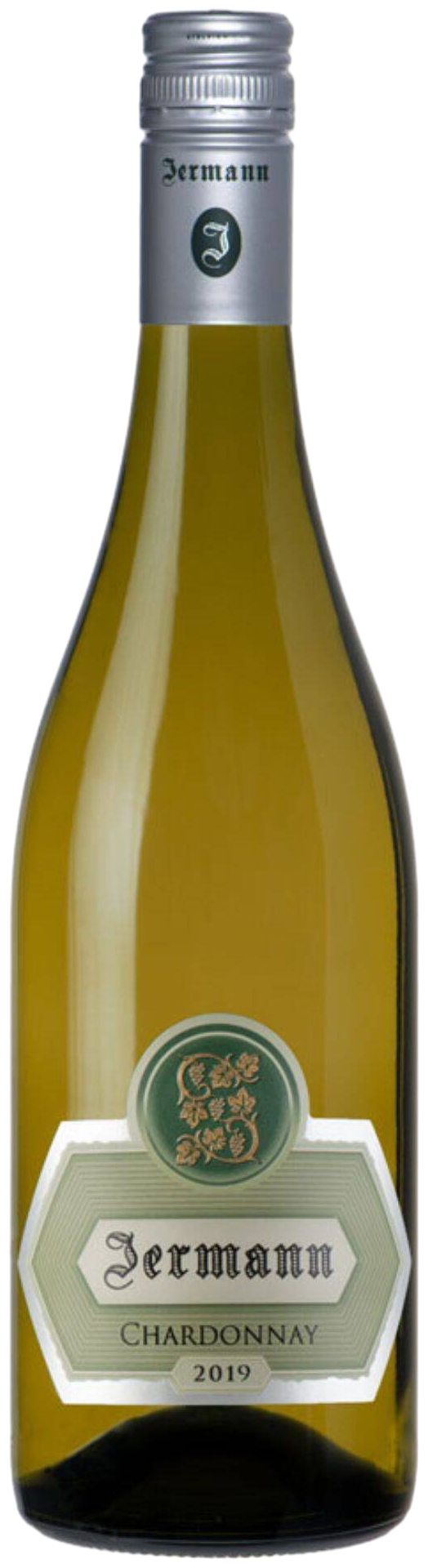
Cabernet Sauvignon, Cabernet Franc, and Chardonnay complete this international palette, often blended or vinified as single varietals in eastern Veneto IGTs. Without the prestige of native varieties, they allow estates to offer an accessible range that appeals to palates less familiar with local specialties. For alpine whites and more aromatic styles, head to neighboring Trentino-Alto Adige.
Producers to discover
Monte del Frà
Owned by the Bonomo family, Monte del Frà is a flagship estate of Valpolicella and Lake Garda. With a catalog covering the full range of Venetian appellations, from Amarone to Bardolino through Soave and Custoza, it's the ideal producer to explore the region's diversity.
What distinguishes Monte del Frà is the consistency of quality across the entire range. Whether you choose their twelve-franc entry-level or their Amarone Riserva, you always find the same standards, the same precision, and the same respect for terroir. Their Custoza Superiore Cà del Magro, awarded 3 bicchieri by Gambero Rosso, is one of our favorite gems.

Our favorite wines from Veneto
Everyday reds
The Valpolicella Classico "Lena di Mezzo" from Monte del Frà is a light, fruity red, the opposite of Amarone. Based on Corvina and Rondinella, it's a wine full of freshness, with aromas of cherry, raspberry, and a touch of bitter almond.
Easy to drink, with supple tannins and beautiful acidity, it's the perfect companion for a pasta dish, pizza, or risotto. At around fifteen francs, it's the kind of wine you buy by the case for everyday drinking. Serve it slightly chilled in summer, you'll thank us.
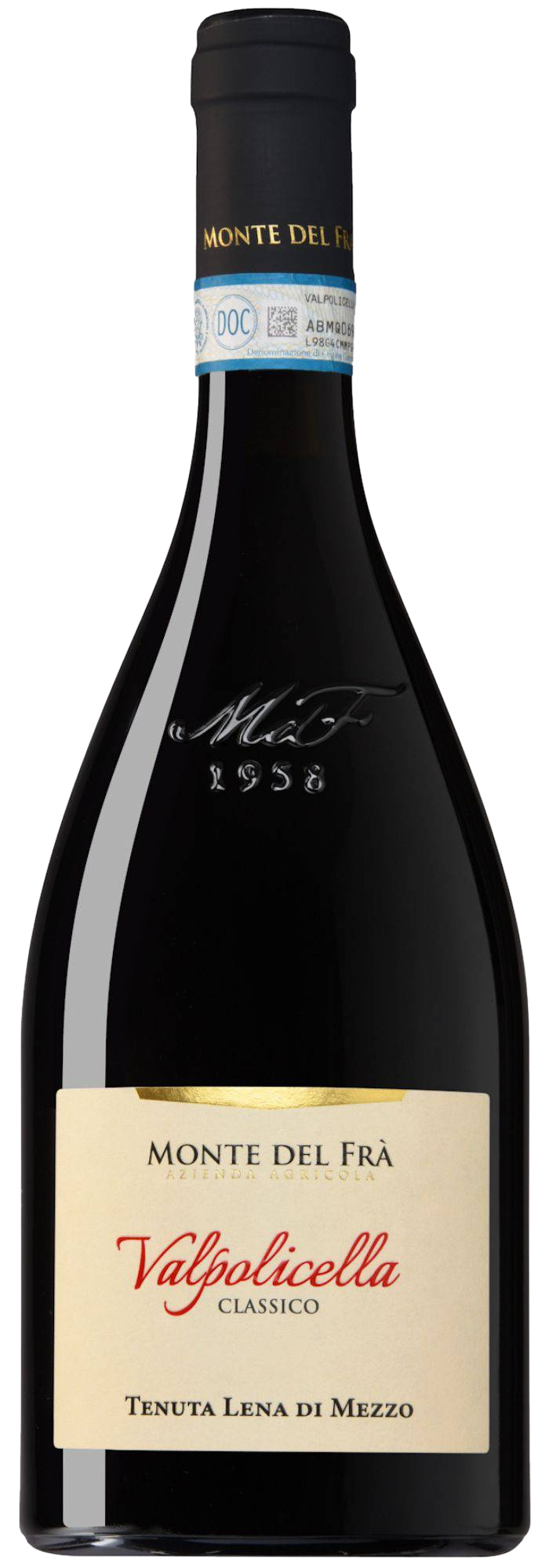
Italy • Veneto • Valpolicella DOC
The Merlot Veronese from Monte del Frà is another gem for everyday drinking. A supple, fruity Merlot, unpretentious but terribly effective. Deep ruby color, nose of ripe red fruits and sweet spices, round and generous palate.
At under fifteen francs, it's a versatile wine that pairs with everything: charcuterie, grilled meats, pasta with ragù, or simply a good sandwich. Venetian Merlot may have less prestige than its Bordeaux cousin, but it has the advantage of being enjoyable on any occasion.
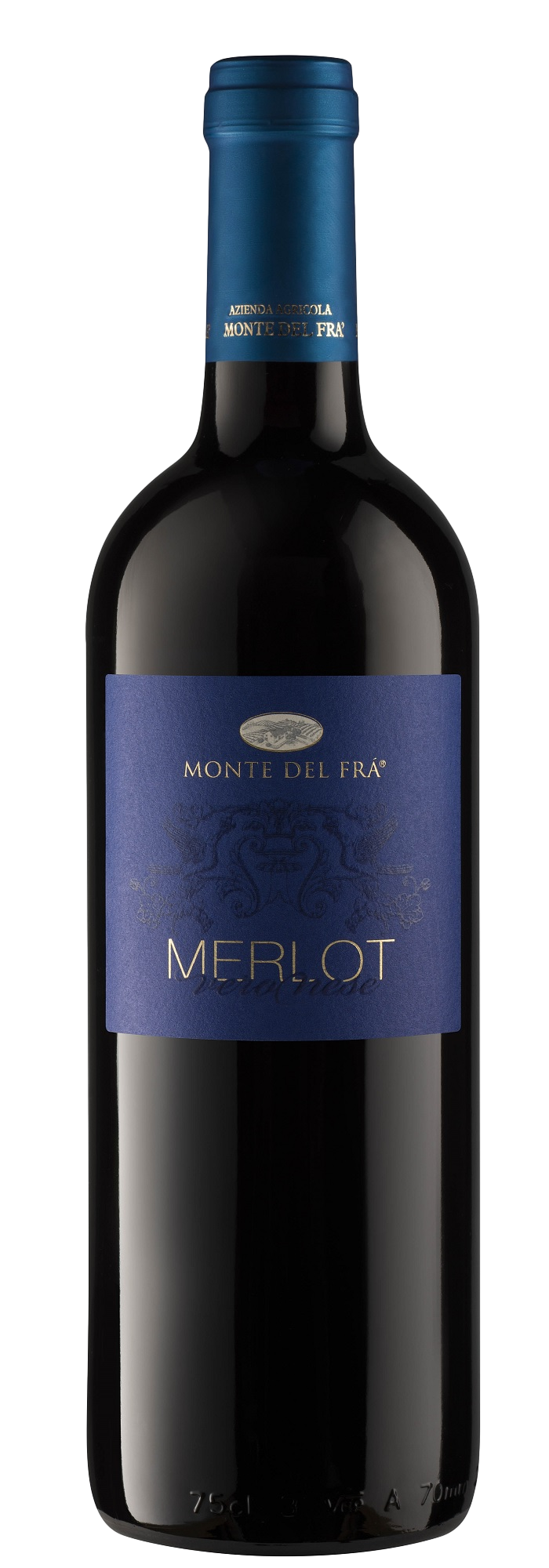
Italy • Veneto • Vénétie
Ripasso, Amarone's little brother
The Valpolicella Ripasso Classico Superiore from Monte del Frà is the ideal bridge to the great wines of Valpolicella. Obtained by re-fermenting a Valpolicella on Amarone pomace, Ripasso gains richness, roundness, and complexity while maintaining remarkable drinkability.
Fruity and powerful, but without excess, it's a bottle made for sharing around a good plate of pasta with ragù, meat lasagna, or a grandmother's recipe that stays on the stove for hours. The quality-to-price ratio is exceptional: at under twenty francs, you get a wine with the depth of an Amarone without the price tag.
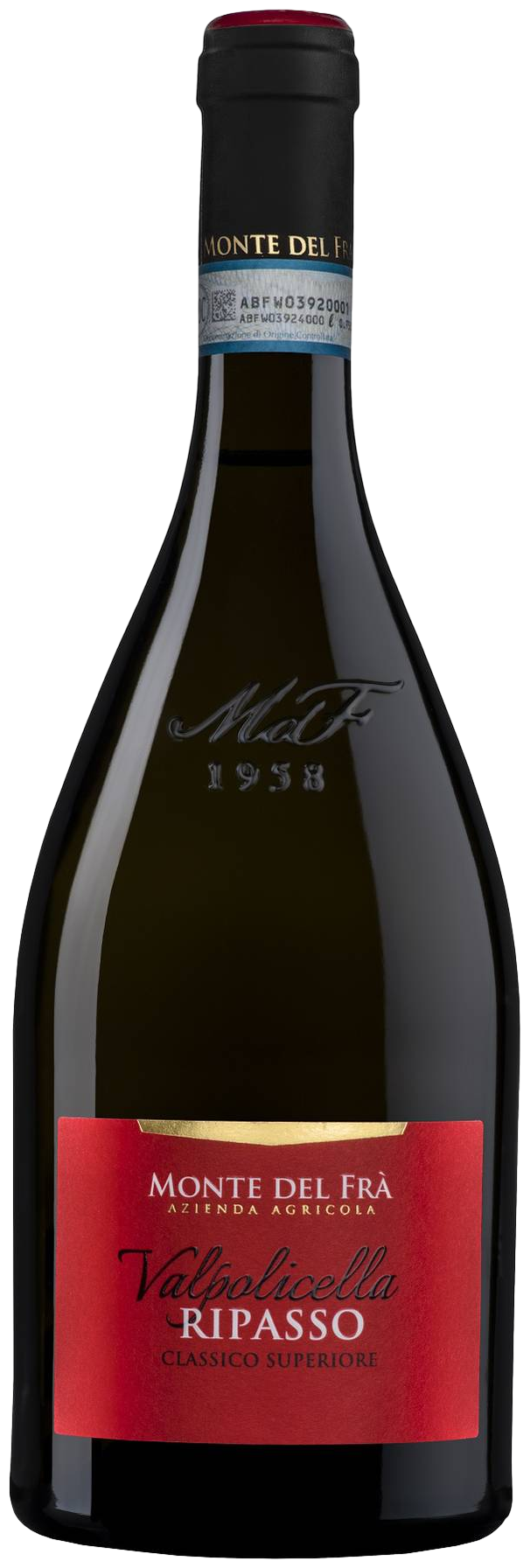
Italy • Veneto • Valpolicella Ripasso DOC
Amarone, for special occasions
The Amarone della Valpolicella Classico DOCG from Monte del Frà is a prestigious wine, dense and complex. From several months of appassimento, it offers aromas of candied fruits, dark chocolate, spices, and leather, with an ample palate and an endless finish.
It's a meditation wine, to open for special occasions or with a beautiful aged cheese. Monte del Frà also offers an Amarone Riserva Scarnocchio, even more concentrated and complex, for those who want to reach the heights of the appellation. The kind of bottle that transforms an ordinary dinner into a memorable evening.
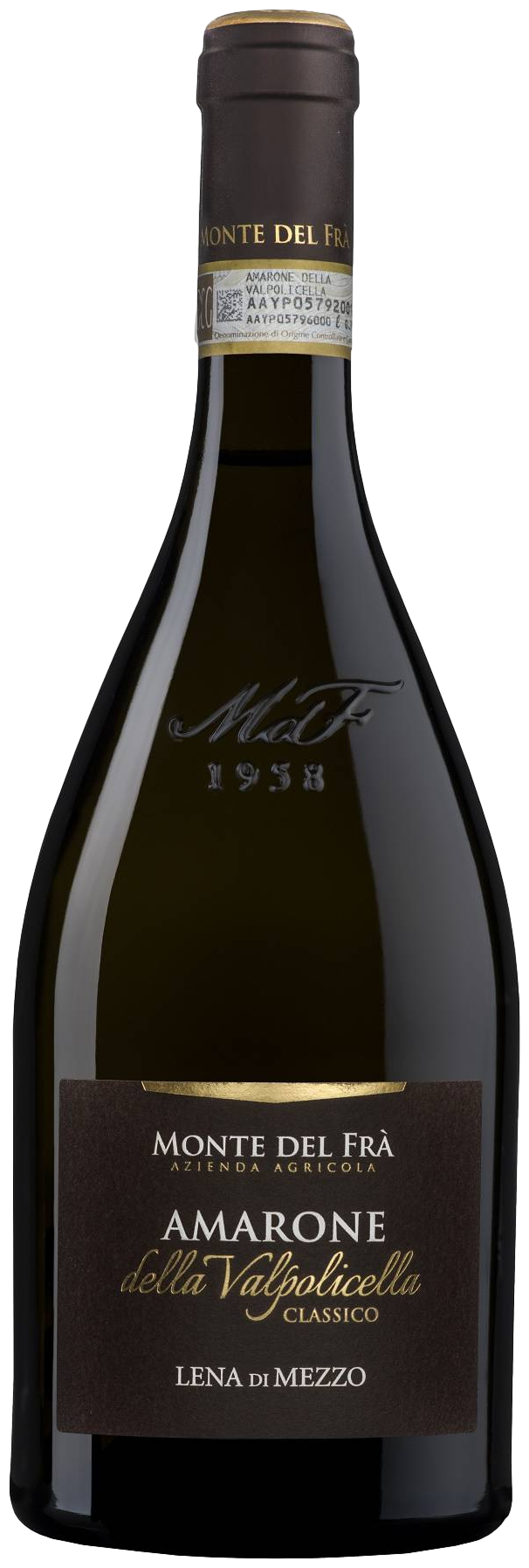
Italy • Veneto • Amarone della Valpolicella DOCG
Whites
The Soave Classico from Monte del Frà is a pure Garganega, fresh and elegant. On the nose, notes of white flowers, green apple, and almond. On the palate, the acidity is lively, the fruit is clean, and the finish is mineral and saline.
It's the perfect white for aperitifs or to accompany seafood. At just over fourteen francs, it's a gem that proves that Soave, when well made, is one of the best quality-to-price ratios in Italian whites. Far, very far from soulless industrial versions.
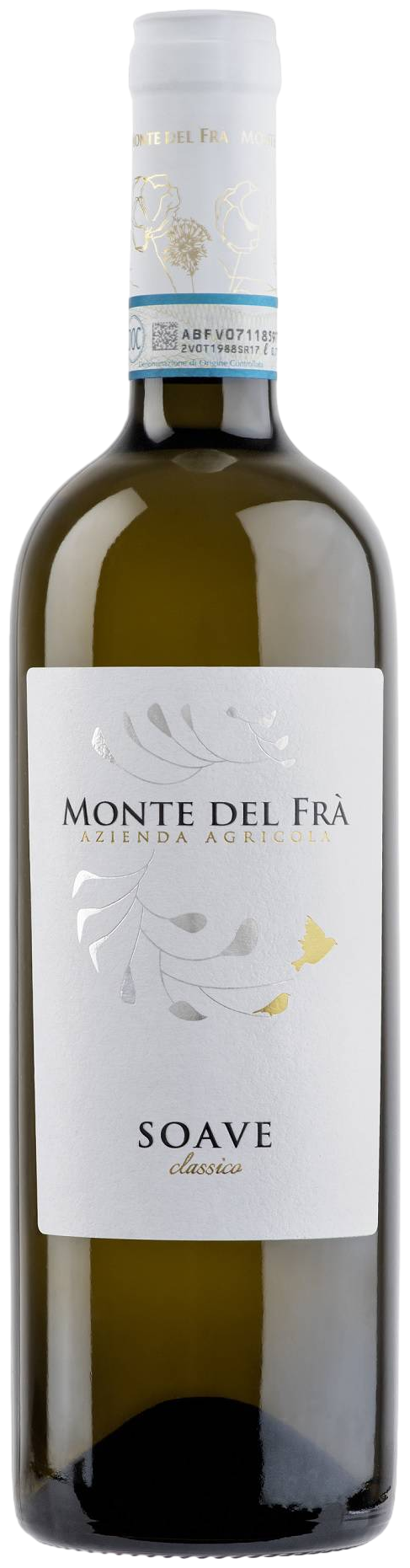
Italy • Veneto • Soave DOC
The Custoza Superiore Cà del Magro from Monte del Frà is a favorite bottle, a real gem you can proudly bring out with friends. Awarded 3 bicchieri by Gambero Rosso (the highest distinction from the Italian gastronomic guide) and rated 92/100 by James Suckling, this white is a treasure.
When you put your nose in the glass, you'll be transported to an orchard full of flowering trees. The palate is a blend of apple, pear, and exotic fruits, while remaining quite dry and faithful to its terroir. The pleasure seems to extend infinitely, with a minerality and freshness that keep you coming back to the glass. It's a white that will please both novices and the most demanding connoisseurs.
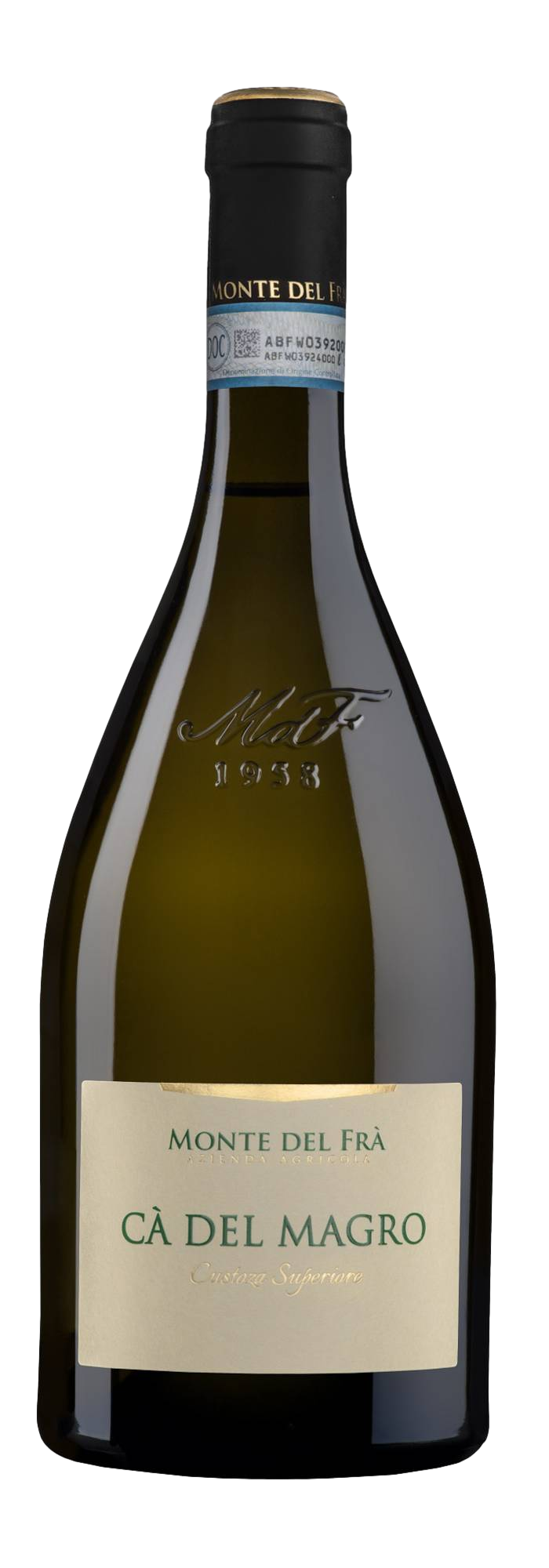
Italy • Veneto • Custoza DOC
Rosé and Pinot Grigio
The Chiaretto di Bardolino from Monte del Frà is the Lake Garda rosé par excellence. Fresh, light, with notes of strawberry and white peach, it's the ideal companion for summer aperitifs, salads, and terrace grilling.
At under twelve francs, it's probably one of the best Italian rosés in this price range. Serve it well chilled, between 8 and 10 degrees, and let yourself be carried away by the lakeside vibes.
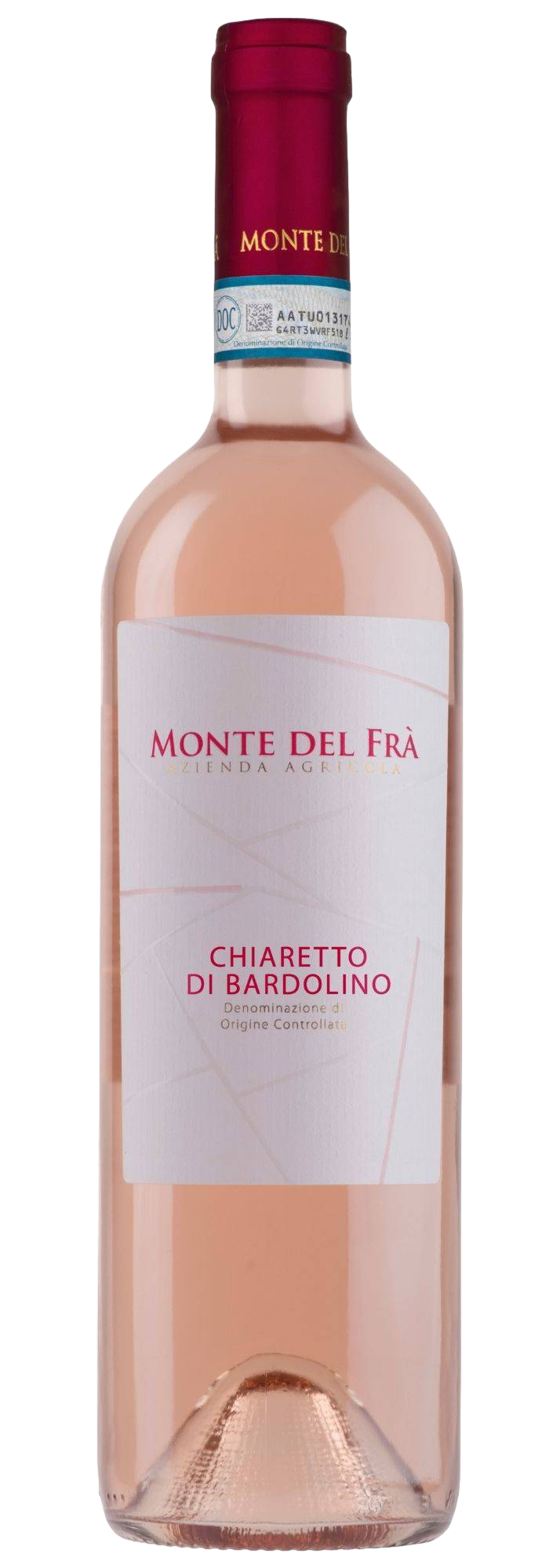
Italy • Veneto • Bardolino DOC
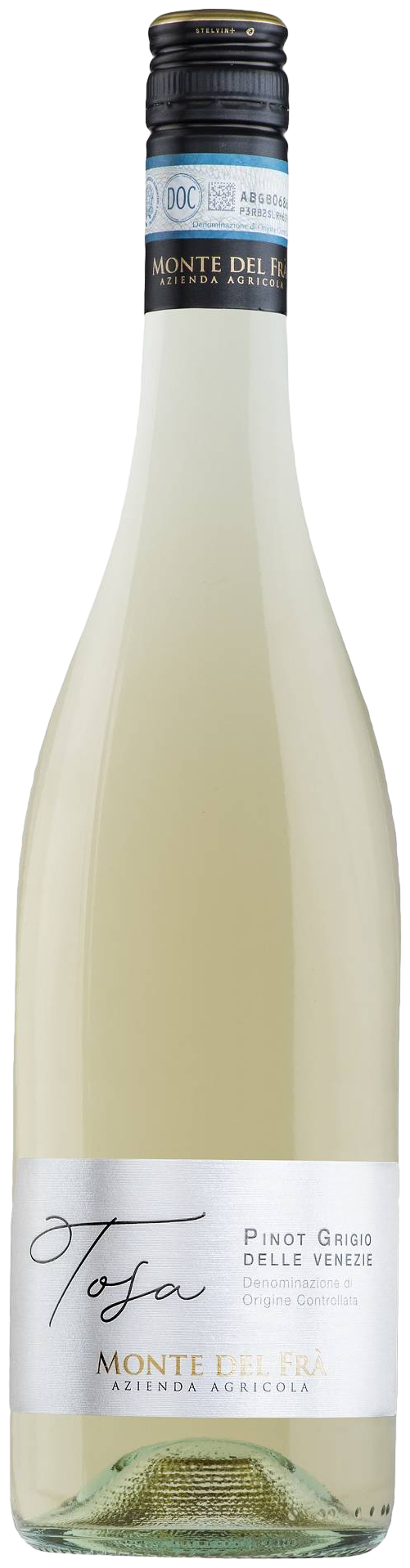
The Tosa Pinot Grigio delle Venezie from Monte del Frà is a simple and effective Pinot Grigio. Fresh, fruity, with notes of pear and green apple, it's the all-purpose white you open without thinking on a weeknight.
At under thirteen francs, it's Pinot Grigio as it should always be: clean, crisp, refreshing, without the flabbiness and boredom of industrial versions. Perfect with antipasti, grilled fish, or simply a good aperitif with friends.
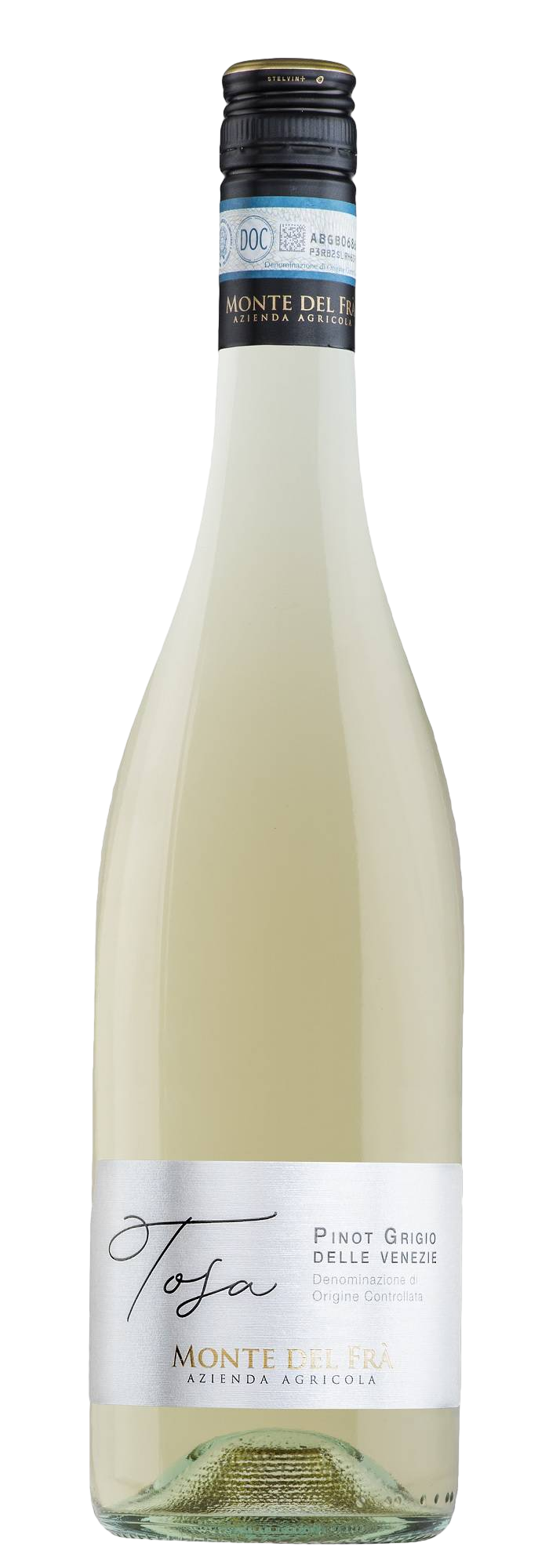
Italy • Veneto • Vénétie
Food and wine pairings with Venetian wines
Venetian cuisine is rich, varied, and deeply rooted in the terroirs of the Po plain, the lakes, and the lagoon.
Risotto all'Amarone and braised dishes
Risotto all'Amarone is the perfect pairing between dish and wine: the creamy rice absorbs the wine's aromas during cooking, and a glass of Amarone or Ripasso alongside completes the harmony. For braised meats like brasato (Venetian-style pot roast), a Valpolicella Superiore or Ripasso will be perfect companions.
Baccalà alla vicentina and fish
Baccalà alla vicentina, dried cod simmered in milk with onions and anchovies, is a Venetian cuisine classic. A structured white like Custoza Superiore Cà del Magro or a Soave Classico will balance the dish's richness with their fresh acidity. For sardines in saor (marinated with onions, vinegar, and raisins), a dry Garganega will be ideal.
Bigoli and Venetian pasta
Bigoli, those thick whole wheat pasta typical of Veneto, are traditionally served with anchovy or duck sauce. With anchovy sauce, a white like Soave will work wonders. With duck ragù, go for a Valpolicella Classico or Ripasso, whose fruity and spicy notes will pair perfectly with the duck's richness.

Tiramisu and desserts
Tiramisu was born in Veneto, in Treviso to be precise. To accompany it, a Recioto della Valpolicella (the sweet version of Amarone) will be a dream pairing: the wine's notes of candied cherry and chocolate echo the layers of mascarpone and coffee in the dessert. For fritole (Venetian Carnival fritters), a well-chilled Prosecco will add a festive touch.
Continuing the journey in northern Italy
Veneto has this rare ability to offer wines for all occasions: a fresh Bardolino for aperitifs, a Soave for fish, a Ripasso for pasta, an Amarone for grand gatherings. Few wine regions offer such a wide range with such consistent quality.
Just to the north, Trentino-Alto Adige awaits you with its alpine whites of incomparable freshness. And if you want to continue exploring great Italian reds, head to Piedmont and its Barolos, or to Tuscany and its Super Tuscans. For a completely different style, Sicily and its volcanic wines hold beautiful surprises.
Salute, and see you on the next adventure! 🍷
Veneto: Discover our wines
Tre Venezie
Venezia Giulia
Venezia Giulia
Venezia Giulia
Pinot Grigio Delle Venezie DOC
Soave DOC
Valpolicella Ripasso DOC
Amarone della Valpolicella DOCG